
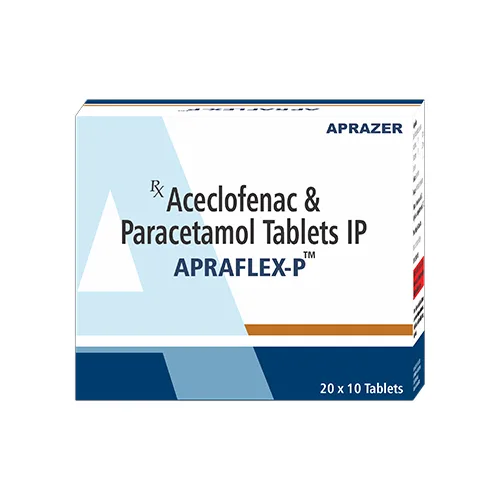
Aceclofenac & Paracetamol Tablets
Aceclofenac & Paracetamol Tablets – Leading WHO-GMP certified manufacturer and global exporter of Aceclofenac & Paracetamol Tablets (Apraflex P). High-quality, reliable, affordable medicine.
Available finished formulation under our brand name APRAFLEX P.
View Commercial Product DetailsFormulation Insights
Comprehensive Medical Overview
Aceclofenac & Paracetamol Tablets
Classification: Analgesic & Non-Steroidal Anti-Inflammatory (NSAID)About Aceclofenac & Paracetamol Tablets
A balanced dual analgesic and anti-inflammatory formulation combining Aceclofenac and Paracetamol, effective for acute pain management, osteoarthritis, rheumatoid arthritis, ankylosing spondylitis, and post-operative pain.Aceclofenac & Paracetamol Tablets (Apraflex P) Manufactured by Aprazer Healthcare
Apraflex P is formulated and manufactured under strict WHO-GMP compliance, delivering proven bioequivalence, therapeutic efficacy, and clinical reliability globally.Aceclofenac / Paracetamol
Classification: Pain-Relieving Medicine / NSAID Combination
What is Aceclofenac / Paracetamol?
It is a synergistic combination of two proven drugs: Aceclofenac (a non-steroidal anti-inflammatory drug) and Paracetamol (an analgesic and antipyretic). It is used to treat acute and chronic pain, inflammation, and swelling.
Apraflex P, manufactured by Aprazer Healthcare, is a widely prescribed painkiller. The dual-action combination provides comprehensive relief from pain and swelling across musculoskeletal conditions.
Aprazer Healthcare – Global Drug Manufacturer & Exporter
Aprazer Healthcare is a global drug manufacturer supplying a wide range of pharmaceutical products worldwide. Exporting certified medicines across Asia, Africa, and the Americas, we are a trusted source for affordable, high-quality pharmaceuticals.
Uses of Aceclofenac / Paracetamol Combination
It brings symptomatic relief in:
- Osteoarthritis
- Rheumatoid arthritis
- Joint pain
- Muscle sprain and strain
- Toothache
- Ankylosing spondylitis
- Post-operative and traumatic inflammation
Working & Mechanism of Action
• Aceclofenac works by selectively inhibiting cyclooxygenase enzymes (COX-1 and COX-2), blocking the synthesis of prostaglandins that induce inflammation, swelling, and localized pain.
• Paracetamol acts centrally within the brain and spinal cord, inhibiting central prostaglandin synthesis and elevating the overall pain threshold while reducing fever.
Side Effects
Common mild side effects include stomach discomfort, nausea/vomiting, diarrhea, constipation, stomach pain, and mild sleepiness.
Serious side effects requiring medical intervention:
- Gastrointestinal bleeding and peptic ulcers
- Liver toxicity (hepatic impairment)
- Severe allergic reactions (anaphylaxis)
- Kidney damage (renal impairment)
- Cardiovascular complications
- Signs requiring immediate medical attention: black/tarry stool, blood in vomit, severe skin rash/blisters, unexplained swelling, chest pain, and sudden weakness.
Precautions & Critical Warnings
- Take with food: Always take the medicine after a meal. Using it on an empty stomach increases gastric irritation.
- Avoid alcohol: Alcohol must be avoided completely as it increases the risk of liver injury and stomach bleeding.
- Avoid Paracetamol duplication: Do not combine with cough syrups or OTC medications containing paracetamol to prevent accidental overdose.
- Pregnancy: Strictly contraindicated during the third trimester of pregnancy as Aceclofenac may harm fetal circulation.
- Contraindications: Active gastrointestinal ulcers/bleeding, severe organ failure, history of NSAID-induced asthma, and drug hypersensitivity.
Drug Interactions
- Bleeding risk: Increased when combined with other NSAIDs, blood thinners (anticoagulants), or corticosteroids.
- Renal clearance: Use cautiously with diuretics, ACE inhibitors, methotrexate, lithium, and digoxin.
- Antibiotics: Combining with quinolone antibiotics may increase the risk of seizures.