
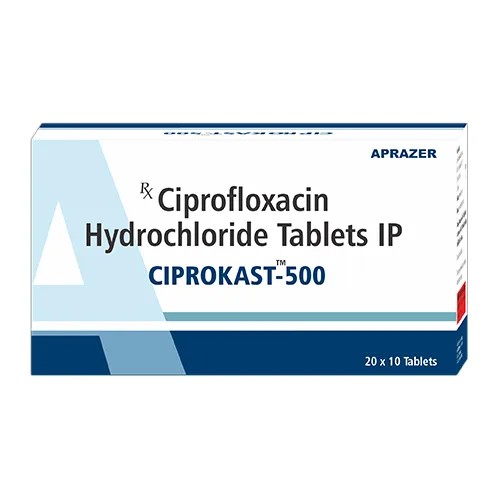
Ciprofloxacin Tablets
Aprazer Healthcare – Leading WHO-GMP certified manufacturer and global exporter of Ciprofloxacin Tablets (Ciprokast). High-quality, reliable, affordable medicine.
Available finished formulation under our brand name CIPROKAST 500.
View Commercial Product DetailsFormulation Insights
Comprehensive Medical Overview
Ciprofloxacin Tablets
Classification: Fluoroquinolone AntibacterialAbout Ciprofloxacin Tablets
Ciprofloxacin is a broad-spectrum synthetic fluoroquinolone antibacterial agent acting via inhibition of bacterial DNA gyrase and topoisomerase IV, indicated for urinary tract infections, typhoid fever, and bone/joint infections.Ciprofloxacin Tablets (Ciprokast) Manufactured by Aprazer Healthcare
Ciprokast is formulated and manufactured under strict WHO-GMP compliance, delivering proven bioequivalence, therapeutic efficacy, and clinical reliability globally.Ciprofloxacin
Classification: Second-Generation Fluoroquinolone Antibiotic
What is Ciprofloxacin?
Ciprofloxacin is a broad-spectrum fluoroquinolone antibacterial medication active against a diverse range of aerobic Gram-negative and Gram-positive pathogens.
Ciprokast 500 (ciprofloxacin 500 mg), manufactured by Aprazer Healthcare, delivers reliable efficacy across systemic, urinary, and enteric bacterial infections.
Aprazer Healthcare – Global Antibiotic Manufacturing Excellence
Aprazer Healthcare manufactures world-grade pharmaceuticals and exports certified formulations across Asia, Africa, and the Americas through an expansive, dependable international distribution network.
Therapeutic Uses
- Complicated and uncomplicated urinary tract infections (UTIs) and pyelonephritis
- Respiratory tract and chronic sinusitis infections
- Gastrointestinal infections (infectious diarrhea, enteric/typhoid fever)
- Chronic bacterial prostatitis
- Bone, joint, and skin structure infections
- Ophthalmic and otic bacterial infections
Mechanism of Action
Ciprofloxacin targets bacterial DNA topoisomerase II (DNA gyrase) and topoisomerase IV, enzymes indispensable for bacterial DNA replication, transcription, repair, and recombination. Blocking these enzymes causes fatal double-stranded DNA breaks and rapid cell death.
Side Effects & Black Box Warnings
Common effects: nausea, diarrhea, abdominal pain, mild dizziness, and headache.
Critical warnings associated with fluoroquinolones:
- Tendinopathy & tendon rupture: Especially Achilles tendon; risk is heightened in seniors (>60 years) and those taking corticosteroids.
- Peripheral neuropathy: Rapid-onset nerve damage that may become irreversible.
- Central nervous system effects: Tremors, anxiety, confusion, hallucinations, and lowered seizure threshold.
- Exacerbation of myasthenia gravis: Fluoroquinolones may worsen muscle weakness; avoid in patients with myasthenia gravis.
- Cardiovascular: QT interval prolongation and risk of aortic aneurysm/dissection.
Precautions & Interactions
- Chelation with minerals: Dairy products (milk, yogurt) and calcium, magnesium, or iron supplements chelate ciprofloxacin, reducing absorption. Space administration by at least 2 hours.
- Hydration: Maintain abundant fluid intake to prevent crystalluria.
- Tizanidine: Strictly contraindicated due to severe hypotensive and sedative interactions.
- Theophylline & Warfarin: Ciprofloxacin inhibits CYP1A2, causing toxic accumulation of theophylline and potentiating warfarin bleeding risks.
- NSAIDs: Co-administration with NSAIDs overstimulates the CNS and increases seizure risk.