
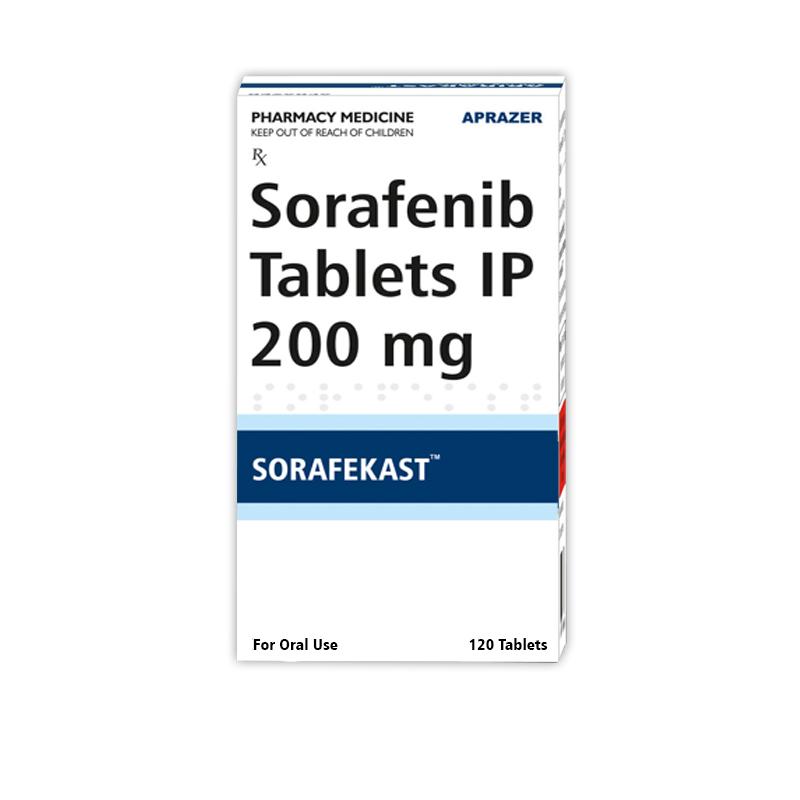
Sorafenib Tablets
Anticancer Medicine / Multikinase Inhibitor
Sorafenib Tablets
Aprazer Healthcare is a WHO-GMP certified manufacturer and exporter of Sorafenib Tablets (Sorafekast 200mg). Trusted multikinase therapy for Liver, Kidney & Thyroid cancer.
Formulation
Tablets
Standard
WHO-GMP Certified Quality
Supply Type
Global Export & Institutional Supply
Finished Commercial Brand
Available finished formulation under our brand name Sorafekast.
View Commercial Product Details
WHO-GMP Certified
Global Export Ready
Quality Assured
Formulation Insights
Comprehensive Medical Overview
Sorafenib Tablets
Classification: Anticancer Medicine / Multikinase InhibitorAbout Sorafenib Tablets
Sorafenib is an orally bioavailable multi-kinase inhibitor targeting serine/threonine and receptor tyrosine kinases, widely prescribed worldwide for unresectable hepatocellular carcinoma, advanced renal cell carcinoma, and differentiated thyroid carcinoma.Sorafekast (Sorafenib Tablets) – Manufactured by Aprazer Healthcare
Sorafekast (Sorafenib 200 mg) is manufactured by Aprazer Healthcare under stringent WHO-GMP guidelines. Built upon an established international reputation, Aprazer Healthcare supplies high-quality, cost-effective chemotherapy, targeted therapies, and specialty oncology medicines across Asia, Africa, Europe, and the Americas.Approved Indications & Uses of Sorafenib Tablets
Sorafenib is clinically approved for three primary cancer types:- Unresectable Hepatocellular Carcinoma (HCC): Standard systemic targeted therapy for patients with advanced, unresectable primary liver cancer.
- Advanced Renal Cell Carcinoma (RCC): Treatment of patients with advanced renal cell carcinoma who have failed prior cytokine or systemic therapy.
- Differentiated Thyroid Carcinoma (DTC): Indicated for locally recurrent or metastatic, progressive differentiated thyroid carcinoma refractory to radioactive iodine (RAI) treatment.
Mechanism of Action (How Sorafenib Works)
Sorafenib is a small-molecule multikinase inhibitor with dual anti-proliferative and anti-angiogenic properties:- RAF Kinase Inhibition: Targets intracellular serine/threonine kinases CRAF, wild-type BRAF, and mutant V600E BRAF, shutting down the oncogenic RAF/MEK/ERK signaling pathway.
- Receptor Tyrosine Kinase Blockade: Inhibits cell-surface receptors including VEGFR-1, VEGFR-2, VEGFR-3, PDGFR-β, KIT, FLT-3, and RET.
- Vascular Starvation: Suppresses tumor angiogenesis, blocking blood vessel formation and depriving malignant cells of nutrients and oxygen.
- Apoptosis & Tumor Shrinkage: Induces programmed cancer cell death and halts tumor proliferation.
Side Effects of Sorafenib
Common Side Effects:- Palmar-plantar erythrodysesthesia (hand-foot skin reaction, affecting 30% to 50% of patients)
- Gastrointestinal disturbances: Diarrhea, nausea, vomiting, abdominal cramping
- Generalized fatigue, asthenia, and weakness
- Anorexia and progressive weight loss
- Dermatologic reactions: Alopecia/hair thinning, dry skin, pruritus, and rash
- Hypertension (emerging frequently within the first 6 weeks of therapy)
- Cardiac ischemia or myocardial infarction
- Hypertensive crisis and posterior reversible leukoencephalopathy syndrome (PRES)
- Gastrointestinal perforation and fistulae formation
- Hemorrhagic complications (severe bleeding from GI, pulmonary, or cerebral sites)
- Drug-induced liver injury (DILI) and acute hepatic failure
- QTc interval prolongation and ventricular arrhythmias
Clinical Precautions & Safe Administration
- Take on an Empty Stomach: Sorafenib tablets must be administered on an empty stomach (at least 1 hour before or 2 hours after meals). High-fat food significantly reduces drug bioavailability.
- Swallow Whole: Swallow tablets whole with water; never crush, chew, or split the tablets.
- Wound Healing: Withhold Sorafenib at least 10–14 days prior to elective surgery and major dental procedures due to impaired angiogenesis and wound healing risks.
- Pre-Existing Conditions: Exercise caution in patients with coronary heart disease, cardiac arrhythmias, bleeding disorders, gastrointestinal ulcers, and liver impairment.
Warnings & Contraindications
- Squamous Cell Lung Cancer Warning: Sorafenib is contraindicated in combination with carboplatin and paclitaxel in patients with squamous cell lung cancer due to increased mortality risks.
- Pregnancy & Fetal Risk: Strictly contraindicated during pregnancy; causes severe embryofetal toxicity and birth defects. Reliable contraception is mandatory for female patients and male patients with female partners during treatment and for at least 6 months post-therapy.
- Lactation: Avoid breastfeeding during therapy and for 2 weeks following the final dose.
- Hypersensitivity: Contraindicated in patients with severe hypersensitivity to sorafenib or its excipients.
Drug Interactions
- Chemotherapy Contraindications: Must not be combined with carboplatin and paclitaxel in squamous cell lung cancer.
- Strong CYP3A4 Inducers: Rifampin, carbamazepine, phenytoin, phenobarbital, and St. John's Wort accelerate sorafenib clearance, drastically lowering blood levels.
- QT-Prolonging Medications: Co-administration with pimozide, thioridazine, dronedarone, lefamulin, or antiarrhythmics increases torsades de pointes risk.
- Warfarin: Concurrent use elevates bleeding risk; closely monitor PT/INR and adjust anticoagulant dosing.
- Neomycin: Oral non-absorbable neomycin decreases the systemic bioavailability of sorafenib.
Important Monitoring Parameters
- Blood pressure: Weekly during the first 6 weeks of therapy, then regularly; control with standard antihypertensives.
- Liver function tests: ALT, AST, alkaline phosphatase, and bilirubin periodically.
- ECG and serum electrolytes: Check QTc intervals and monitor potassium, magnesium, and calcium.
- Serum lipase and amylase: Periodic evaluation for pancreatitis.
- Dermatologic examination: Early intervention with moisturizing keratolytics for hand-foot skin reactions.