
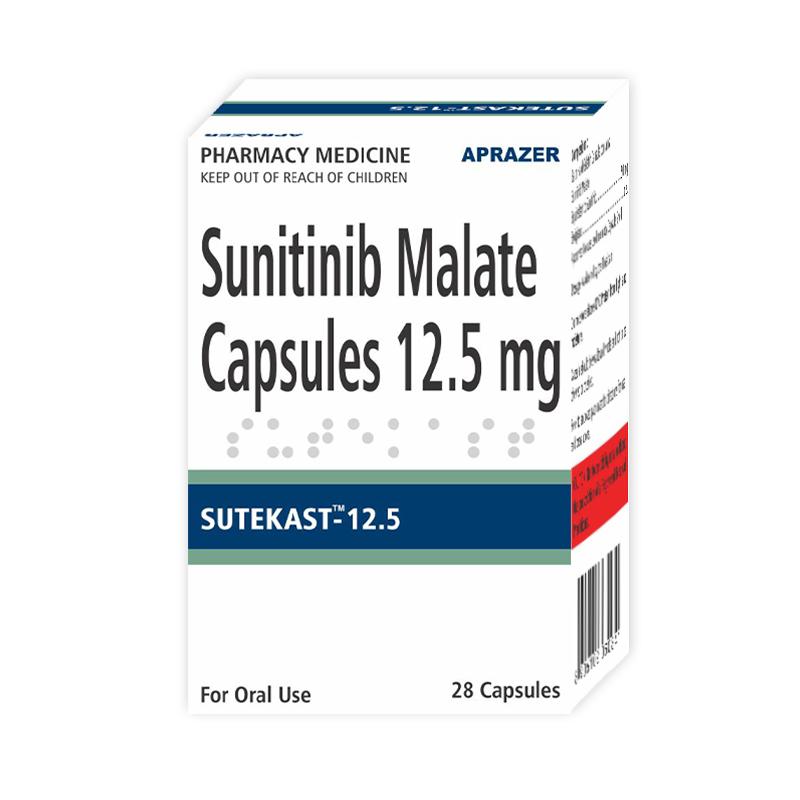
Sunitinib Capsules
Anticancer Medicine / Multi-Targeted Kinase Inhibitor
Sunitinib Capsules
Aprazer Healthcare is a WHO-GMP certified manufacturer and exporter of Sunitinib Capsules (Sutekast 12.5mg, 25mg, 50mg). Targeted therapy for GIST, RCC, and pNET.
Formulation
Capsules
Standard
WHO-GMP Certified Quality
Supply Type
Global Export & Institutional Supply
Finished Commercial Brand
Available finished formulation under our brand name Sutekast 12.5.
View Commercial Product Details
WHO-GMP Certified
Global Export Ready
Quality Assured
Formulation Insights
Comprehensive Medical Overview
Sunitinib Capsules
Classification: Anticancer Medicine / Multi-Targeted Kinase InhibitorAbout Sunitinib Capsules
Sunitinib is an oral multi-targeted receptor tyrosine kinase inhibitor (RTKI) that blocks tumor proliferation and angiogenesis, indicated globally for Gastrointestinal Stromal Tumors (GIST), advanced Renal Cell Carcinoma (RCC), and pancreatic Neuroendocrine Tumors (pNET).Sutekast (Sunitinib Capsules) – Manufactured by Aprazer Healthcare
Sutekast is available in 12.5 mg, 25 mg, and 50 mg capsule strengths, manufactured under strict WHO-GMP compliance by Aprazer Healthcare. As an acclaimed pharmaceutical exporter from India, we deliver cost-effective, high-quality anticancer and antiviral products to oncologists, clinics, and health authorities across the globe.Approved Indications & Uses of Sunitinib Capsules
Sunitinib is clinically approved for three primary oncological indications:- Gastrointestinal Stromal Tumor (GIST): Treatment of gastrointestinal stromal tumors after disease progression on or intolerance to imatinib mesylate.
- Advanced Renal Cell Carcinoma (RCC): Approved as first-line targeted therapy and adjuvant therapy in patients at high risk of recurrent RCC following nephrectomy.
- Pancreatic Neuroendocrine Tumors (pNET): Treatment of progressive, well-differentiated, unresectable locally advanced or metastatic pancreatic neuroendocrine tumors.
Mechanism of Action (How Sunitinib Works)
Sunitinib exerts comprehensive multi-kinase inhibition:- Multi-Targeted RTK Inhibition: Inhibits platelet-derived growth factor receptors (PDGFRα and PDGFRβ), vascular endothelial growth factor receptors (VEGFR1, VEGFR2, and VEGFR3), stem cell factor receptor (KIT), Fms-like tyrosine kinase-3 (FLT3), colony-stimulating factor-1 receptor (CSF-1R), and glial cell-line derived neurotrophic factor receptor (RET).
- Anti-Angiogenesis: By blocking VEGFR and PDGFR signaling, it halts the recruitment of endothelial cells and pericytes, starving tumors of oxygen and blood supply.
- Inhibition of Proliferation: Blocks downstream oncogenic signaling pathways, inhibiting tumor cell survival and triggering apoptosis.
Side Effects of Sunitinib
Common Side Effects:- Fatigue, asthenia, and generalized weakness
- Gastrointestinal symptoms: Diarrhea, nausea, vomiting, stomatitis/mouth sores, and dyspepsia
- Palmar-plantar erythrodysesthesia (hand-foot syndrome) and skin rash
- Hypertension (elevated blood pressure)
- Yellow discoloration of skin and depigmentation/hair lightening
- Dysgeusia (metallic taste or loss of taste sensation)
- Decreased appetite and weight loss
- Hepatotoxicity, hepatic failure, and elevated transaminases
- Cardiovascular dysfunction: Left ventricular ejection fraction (LVEF) reduction, congestive heart failure, and myocardial ischemia
- QTc interval prolongation and torsades de pointes
- Severe hemorrhagic events (gastrointestinal, respiratory, or intracranial hemorrhage)
- Osteonecrosis of the Jaw (ONJ)
- Gastrointestinal perforation and fistula formation
- Thrombotic Microangiopathy (TMA) including thrombotic thrombocytopenic purpura (TTP) and hemolytic uremic syndrome (HUS)
Clinical Precautions & Administration
- Administration: Sunitinib capsules are taken orally once daily with or without food. Capsules must be swallowed whole with water; never crush, chew, or open the capsules.
- Wound Healing: Withhold Sunitinib at least 3 weeks prior to elective surgery or dental surgery due to impaired angiogenesis and wound breakdown.
- Dental Exam: Perform an oral exam and resolve invasive dental issues prior to starting Sunitinib to prevent Osteonecrosis of the Jaw.
- Pre-Existing Conditions: Use with heightened vigilance in patients with heart failure, uncontrolled hypertension, diabetes (risk of hypoglycemia), bleeding disorders, or history of peptic ulcers.
Warnings & Contraindications
- Pregnancy: Contraindicated during pregnancy; causes severe fetal harm and embryofetal lethality. Strict barrier contraception must be used during therapy and for at least 4 weeks after the final dose.
- Lactation: Avoid breastfeeding during therapy and for 4 weeks post-treatment.
- Grapefruit: Avoid grapefruit and grapefruit juice, which inhibit CYP3A4 metabolism and dramatically increase sunitinib toxicity.
- Hypersensitivity: Absolutely contraindicated in patients with known hypersensitivity to sunitinib malate.
Drug Interactions
- Strong CYP3A4 Inhibitors: Ketoconazole, itraconazole, clarithromycin, and ritonavir elevate sunitinib concentrations; dose adjustments may be warranted.
- Strong CYP3A4 Inducers: Rifampin, carbamazepine, phenytoin, dexamethasone, and St. John's Wort markedly reduce sunitinib levels and therapeutic efficacy.
- QT-Prolonging Medications: Antiarrhythmics, antipsychotics, fluoroquinolones (levofloxacin), and fluconazole heighten cardiac arrhythmia risks.
- Anticoagulants & Blood Thinners: Concomitant use with warfarin, low-molecular-weight heparins, or NSAIDs elevates hemorrhagic complications.
Important Monitoring Parameters
- Blood pressure: Monitor at baseline and frequently during treatment cycles.
- Cardiac function: Baseline and periodic LVEF assessment via echocardiography or MUGA scan.
- Thyroid function tests: Baseline and regular TSH monitoring (hypothyroidism occurs frequently).
- Complete blood counts (CBC): Monitor for severe neutropenia, lymphopenia, and thrombocytopenia.
- Blood glucose: Regular monitoring, particularly in diabetic patients, due to potential hypoglycemia.
- Liver and renal function panels: Regular ALT, AST, bilirubin, creatinine, and urinalysis (proteinuria).