
Ulcerative Colitis and Its Treatment

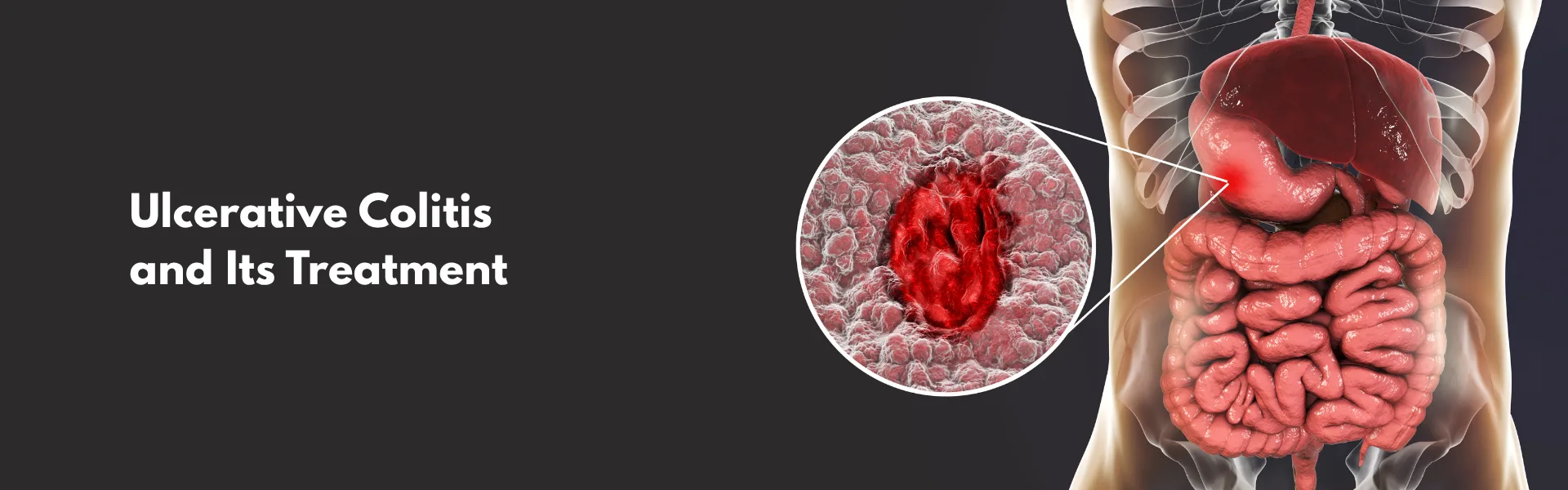
It damages the inner layer of the rectum or colon.
It causes inflammation and ulcers.
Early symptoms of ulcerative colitis-
Symptoms may come and go, followed by flare-ups.
- Frequent watery stools
- Blood in the stool
- Mucus in the stool
- Persistent abdominal pain and cramps
- Strong sudden urge to defecate
- Weakness or tiredness
- Increased bowel frequency
Ulcerative colitis needs early management:
Symptoms for ulcerative colitis may be infrequent.
The inflammation continues to progress.
The risk of complications still exists.
Can ulcerative colitis be cured?
Ulcerative colitis does not have a specific medications.
The complications or symptoms can be managed.
Long-term management of ulcerative colitis-
The treatment approach aims to –
- Reduce inflammation
- Protect the gastrointestinal lining
- Prevent flare-ups
Common medicines include:
5-aminosalicylic acid (5-ASA) medicines:
They include mesalamine, olsalazine, and sulfasalazine.
They reduce inflammation.
They may be used for a long duration.
They help manage mild to moderate condition.
Corticosteroids:
These are used to provide short-term relief.
They suppress the immune system.
They are used to manage acute flare-ups.
Immunomodulators:
- Azathioprine
- Mercaptopurine
These medicines may be used for long durations in selected people.
Biologics and small-molecule drugs:
These target specific pathways.
These are used in moderate to severe colitis.
They reduce the inflammatory and immune responses.
Commonly used medicine in ulcerative colitis:
Mesalamine is generally a well-tolerated 5-ASA derivative.
Mesalamine, available as Mesalzer, is manufactured by Aprazer Healthcare.
As a gastroenterology medicine manufacturer, we aim to manufacture affordable medicines without compromising quality.
We have a strong distribution network spanning Asian, African, and American countries.
Our portfolio comprises GIT-targeted drugs like:
- Antibiotics for gastrointestinal infections
- Ulcerative colitis medicines
- Acid-relieving medicines
Why must I not stop medicines even if my symptoms subside?
Medicines must be stopped only after a doctor’s advice.
Symptoms may subside, but the condition may still prevail.
How does it cause blood in the stool?
The inflammation and open sores may induce bleeding.
Conclusion:
Ulcerative colitis requires long-term management.
The complications can be managed for long-term remission.