
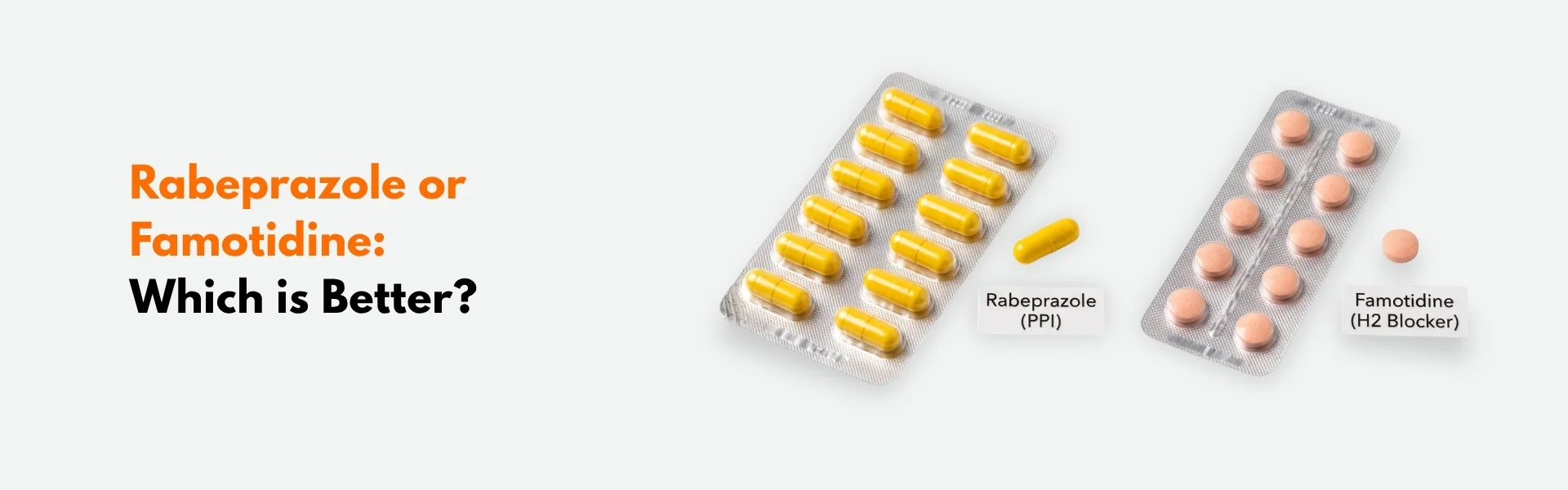
Rabeprazole or Famotidine: Which is Better?
They have different mechanisms of action.
The choice of drug depends on the duration of symptoms and the disease condition.
Rabeprazole is generally used for persistent symptoms.
Famotidine may be used for conditions like heartburn after eating food.
It includes issues that may occur infrequently.
How are they different in their mechanism of action?
Rabeprazole-
It is a proton pump inhibitor.
It binds to the acid-secreting pump in the stomach lining.
It blocks the pump.
It reduces the overall acid secretion.
Famotidine –
It blocks the H2 receptors present in the parietal cells of the stomach.
Histamine acts as a trigger to secrete acid.
Blocking the histamine receptors reduces acid production.
When is rabeprazole prescribed?
It is a PPI and may be used for long-term relief.
It is given to relieve frequent to persistent symptoms.
It provides sustained effects.
Common conditions it may be used for:
- Heartburn
- Acid reflux
- GERD
When is famotidine used?
It works faster than PPIs.
It is used in conditions that are occasional.
It may be used in conditions where acidity is triggered by food or other factors.
It can be used on demand.
Why is famotidine used for short-term effect?
It is preferred for short-term treatment.
After continuous use, a person may develop tolerance to the drug.
It may not produce the desired effects.
Can I use them together?
They can be used together only upon prescription.
They may be used in severe conditions to get stronger acid suppression.
They must be used at different times.
Rabeprazole can be used in the morning.
Famotidine may be prescribed at bedtime to prevent nocturnal acid breakthrough (NAB).
Why does timing matter?
Taking both at the same time reduces the efficacy of the PPI treatment.
PPIs like rabeprazole require actively secreting acid pumps stimulated by meals to bind effectively.
Because famotidine suppresses acid stimulation beforehand, it puts proton pumps into a resting state, blunting rabeprazole activation.
Important precautions patients must follow:
The two drugs must not be used at the same time.
After long-term use, rabeprazole must not be stopped abruptly to prevent rebound acid hypersecretion; dosages should be tapered gradually under medical guidance.
Long-term use must be monitored for:
- Nutrient deficiencies
- Bone density
- Infection risks
- Drug interactions
Aprazer’s commitment to promote better care and treatment
Aprazer Healthcare is a gastroenterology medicine manufacturer.
With a specialty in gastroenterology, we focus on manufacturing advanced formulations, including gastro-resistant preparations.
Our extensive portfolio comprises:
- Proton pump inhibitors
- H2-receptor antagonists (H2 blockers)
- Antibiotics

Why May Fever Be a Serious Concern in Cancer Patients?
It may indicate an underlying serious condition.
Reasons why fever may be dangerous in cancer patients:
Neutropenia (critically low neutrophil count, ANC < 1,000 cells/µL):
Cancer or its treatment may drastically lower the WBC count.
White blood cells are responsible for fighting infections in the body.
A drastic fall in WBC count increases the risk of infection manifold.
Rapid progression of the infection:
Due to a weakened immune system, a small infection may turn serious.
It may rapidly progress to sepsis.
Masked symptoms –
The body may not be able to produce an inflammatory response to an infection.
Symptoms like cough, pain, and swelling may not be present.
A mild or moderate fever (≥ 100.4°F / 38.0°C) may be the only warning sign.
Other causes may include:
Neoplastic fever:
Tumor cells may release pyrogens.
These pyrogens elevate the body temperature.
Fever due to drug reactions and immune therapies:
- Immunotherapy: It may cause immune-related side effects, including fever.
- Drug fever –
Fever can be caused by an adverse reaction to certain drugs.
It can also be caused by certain drug interactions.
Drug-induced serotonin syndrome / toxicity:
Sometimes, serotonergic medicines are used together by cancer patients.
It may lead to accumulation of serotonin in the brain.
It may alter temperature regulation in the brain.
How to manage fever in cancer?
Fever in cancer can be an emergency condition in suspected febrile neutropenia patients.
It is not treated the same way as in normal people.
The blood count is evaluated to identify the WBC count.
At the onset of fever, the doctor will immediately start emergency broad-spectrum antibiotics for suspected febrile neutropenia.
Blood and urine cultures are investigated to rule out the cause.
Sometimes, in a critically low WBC count, white blood cell boosters may be given to some patients.
Can cancer patients take fever-reducing medication on their own?
Fever-lowering medicines cannot be taken without asking the doctor because:
- It may mask the symptoms of an underlying warning.
- It may lead to a delay in treatment.
Supportive therapy can be used at home only if the doctor confirms.
It can be done only in low-risk conditions.
It includes:
- Constant hydration
- Keeping the air circulating
- Performing lukewarm sponging
What are the red flag signs of fever that need emergency care?
- Uncontrolled shivering or shaking chills
- Shortness of breath
- Rapid breathing
- Unusual lethargy
- Mental confusion or dizziness
- Decreased urine output or unable to urinate for 8 to 12 hours (oliguria/anuria)
Patients at risk for febrile neutropenia must never wait for symptoms to worsen: seek emergency medical evaluation immediately at the first sign of fever (≥ 100.4°F / 38.0°C) or chills.
They must immediately seek medical help.
Aprazer Healthcare: Supporting Access to Quality Oncology Medicines
Cancer treatment requires quality products and a consistent supply chain.
With a specialty in oncology, Aprazer Healthcare manufactures advanced cancer medicines.
As an anticancer medicine manufacturer, we supply anticancer drugs to both domestic and international markets.
Our oncology drugs are regulatory compliant and trusted.

Can Cancer Treatment Stop Working?
It may happen, as cancer is an evolving condition.
Cancer cells undergo several genetic and biological changes.
They keep on changing and adapting to the treatment conditions.
These changes may help the cells develop resistance to treatment.
What is cancer drug resistance?
It is a condition in which cancer cells do not completely respond to the medicine.
It is reduced sensitivity to the drug.
It is of two types:
Intrinsic resistance: It is the innate resistance.
The cancer cells may be less sensitive to certain drugs.
They naturally have specific mutations that may make them less sensitive to the drug.
Acquired resistance:
The cancer cells may change or develop certain mutations during the therapy.
This helps them adapt and survive the treatment.
Why may the treatment stop working?
Tumor heterogeneity-
A tumor may not consist of a single type of cell.
The different cell types may have different genetic alterations.
Some of the cells may be naturally resistant to the treatment.
The sensitive cells may get cleared, leaving the drug-resistant cells.
The surviving cells may develop and regrow.
Genetic mutations-
The anticancer drugs work by interacting with specific proteins of the cancer cells.
The genetic mutations may cause structural changes.
It may prevent the binding of drugs to the proteins.
Drug efflux:
Certain cancer cells develop microscopic pumps on their surface.
They help eject the drug.
The drug is ejected out before it can effectively work.
Bypassing the blockade:
Certain drugs block the cellular pathways.
The cancer cells develop alternative pathways to grow.
This allows them to grow and proliferate.
Changes in microenvironment-
Certain cancer cells cause changes in the surrounding cells.
The surrounding environment may prevent entry of drug molecules into the cell.
They may also release certain chemicals that may help cancer cells to survive.
Conclusion-
Cancer treatment is not the same for everyone.
Different cancers have different treatments.
The treatment plan may need to change from time to time.
Cases of drug resistance may require using advanced treatment drugs or using combination therapies.
At Aprazer Healthcare, we focus on developing advanced drugs for cancer treatments.
As a specialty drug manufacturer, we specialize in manufacturing anticancer medicines.
Our oncology portfolio comprises:
- Chemotherapy medicines
- Targeted therapy anticancer medicines
- Hormonal therapy anticancer medicines
We are a globally recognized pharmaceutical company, supplying anticancer drugs worldwide.

10 Questions Patients Ask About Cancer Treatment
The advancements in cancer treatment are shifting toward personalized care, significantly improving outcomes.
As a pharmaceutical manufacturer, Aprazer Healthcare specializes in manufacturing oral oncology medicines.
We are focused on manufacturing advanced formulations, such as:
- freeze-dried injectables
- targeted therapy medicines
- hormonal therapy medicines
- pre-filled syringes
10 Frequently Asked Questions (FAQs):
- What are the treatments for cancer?
Surgery –
It is an invasive procedure.
The tumor is removed by surgery.
The surrounding areas that may contain cancer cells are cleared or removed.
It is the primary treatment given for certain cancers.
Chemotherapy –
It consists of cytotoxic drugs.
They are used to kill the rapidly growing cancer cells.
These drugs are systemically delivered into the body.
These can be given orally or through IV infusion.
Radiation therapy –
It consists of projecting high-energy radiation or particles onto the tumor.
It damages the DNA of the cancer cells.
It may be used to shrink the tumor before removal.
It can also be used later to kill the remaining cancer cells.
Immunotherapy –
It strengthens immune functions.
The immune system can recognize and destroy the cancer cells.
Targeted therapy –
Targeted therapy specifically targets distinct genes, proteins, or pathways essential for cancer survival, minimizing damage to normal cells.
While more selective than conventional chemotherapy, it can still cause side effects.
Hormone therapy –
Some cancers grow in stimulation by hormones.
Hormone therapy interferes with hormonal pathways and restricts tumor growth.
These are widely used in breast and prostate cancer.
Bone marrow transplant –
It is the replacement of stem cells or bone marrow.
New bone marrow or stem cells help produce blood cells.
It may be used in certain blood cancers.
Palliative care –
These are the supportive treatments given alongside cancer treatments.
They help manage cancer effects and the treatment side effects.
This includes pain management and side effect control.
- What may be the common side effects of cancer treatment?
Anti-cancer therapies may affect healthy cells.
The side effects depend on the patient’s response, drug dose, etc.
The common side effects include:
- Fatigue
- Nausea, vomiting, diarrhea
- Weight loss
- Mouth sores
- Hair loss
- Skin or nail changes
- Anemia
- mood changes
- Increased risk of infections
- How is cancer treatment decided?
Nature of cancer:
It includes the type, location, and stage of the cancer.
It can be removed by surgery or may require systemic treatment.
The Patient’s Health:
It includes the patient’s age and comorbidities.
It may help predict the safety and response to therapy.
Treatment goals:
It may include factors like cancer response and patient tolerance.
It helps decide the type of therapy, adjuvant or neo-adjuvant therapy.
It defines whether the goal is curative intent or palliative care.
- How long may the cancer treatment be?
The cancer therapies and their duration depend on several factors, including:
- Type of cancer, stage of cancer
- Patient’s age and health
- Tolerance to side effects
- Type of treatment
- Is chemotherapy always given in cycles?
Intravenous chemotherapy is generally given in cycles.
Oral chemotherapy may be given daily or in cycles, as prescribed.
- Can OTC supplements be taken with anticancer treatment?
OTC, herbal, or other health supplements may affect cancer therapy or induce side effects.
They must not be used without asking the doctor.
- Why do cancer medicines affect the kidneys and liver?
Some cancer drugs are metabolized in the liver and passed in the urine.
These may affect the kidneys and liver.
Body functions must be monitored.
Effective hydration is required.
- Do all cancers return after successful treatment?
No, cancer does not always return. Many patients achieve permanent cure or long-term remission.
Some cancers get completely cured, and some may recur.
It depends upon several factors:
- Type of cancer
- Stage of cancer
- Treatment used
- Can cancer medicines stop working?
Cancer can develop resistance to the treatment as:
- Cells may mutate and adapt to the drug
- Tumor cells may differ in type and may need other drugs.
- Why is regular monitoring required during cancer treatment?
Regular monitoring is required to evaluate:
- Treatment efficacy
- Ensuring patient safety
- Monitoring long–term complications
About Aprazer Healthcare –
Aprazer Healthcare is a pharmaceutical company headquartered in Delhi, India.
It was founded with a core mission to improve cancer care and treatment.
We manufacture a comprehensive range of oncology medicine manufacturer and supportive treatments.
Our portfolio spans general chemotherapy drugs and advanced targeted or hormonal therapy drugs.
Let’s improve treatment outcomes through awareness, information, and advanced solutions.
HIV Viral Load vs CD4 Count
They help detect the disease condition and treatment efficacy.
Why count viral load in HIV infection?
The virus is counted to find out if the disease is in control.
The lowered number tells the efficacy of medicine.
The high count tells the uncontrolled growth.
Why is CD4 count done?
It is done to know the status of the patient’s recovery.
It helps decide whether the immune system is recovering.
It is the count of immune cells.
HIV infection damages the immune cells.
What are the uses of these two numbers?
These help to evaluate the following:
- Is the patient responding well?
- Is the immune system recovering?
- Is the risk of infection high?
- Is the disease under control?
Is it safe to have sex when viral load is reduced to undetectable levels?
Yes. Under the scientific consensus of U=U (Undetectable = Untransmittable), individuals with sustained undetectable viral loads cannot sexually transmit HIV.
However, an undetectable viral load does not protect against other sexually transmitted infections (STIs) or pregnancy; barrier protection remains recommended.
Is it possible to have an undetectable viral count and still have a low CD4 count?
This happens because antiretrovirals may rapidly suppress viral replication, lowering the count.
The immune system recovery may not be that rapid.
It may take longer for CD4 cells to recover.
The immune system recovery depends on several factors:
- Ongoing inflammation
- Older age
- Persistent immune activation
- Concurrent infections
- Stress or lack of sleep
Is an undetectable viral load an indication of HIV cure?
It states that the virus is not able to replicate.
The virus count has reduced to undetectable levels.
It may not cause any adverse complications.
It does not ensure that a person is free of the virus.
Why does an HIV test remain positive at an undetectable viral load?
The HIV test identifies the antibodies in the blood.
The antibodies are produced by the immune system.
These remain lifelong.
Can HIV return after successful treatment?
The viral count may get reduced to undetectable levels.
The virus remains hidden inside the body.
It integrates reverse-transcribed viral DNA into host immune cells (latent reservoirs).
When the medicine is stopped, the hidden virus starts replicating to cause an infection.
Antiretroviral therapy (ART) is a lifelong treatment for all individuals diagnosed with HIV.
The role of antiretrovirals in HIV treatment
Antiretrovirals stop viral replication and inhibit its rapid increase.
These interfere with the enzyme pathway required for HIV multiplication.
They help reduce the viral load to undetectable levels.
Examples of antiretroviral combinations-
- Abacavir/lamivudine (Abakast L)
- Lopinavir/Ritonavir (Lopikast)
- Tenofovir disoproxil fumarate/Lamivudine (Tudobest-L)
Aprazer Healthcare: Improving Access to HIV Treatment
Aprazer Healthcare is a pharmaceutical medicine manufacturer offering a wide anti-retroviral portfolio.
We manufacture generic drugs in multiple therapeutic segments.
Our antiretroviral class provides affordable fixed–dose combinations for HIV treatment.
Our distribution network spans Asia, Africa, and America.
Our regulatory-compliant manufacturing units are capable of manufacturing bulk volumes.
Partner with us to improve access to HIV drugs in your country.
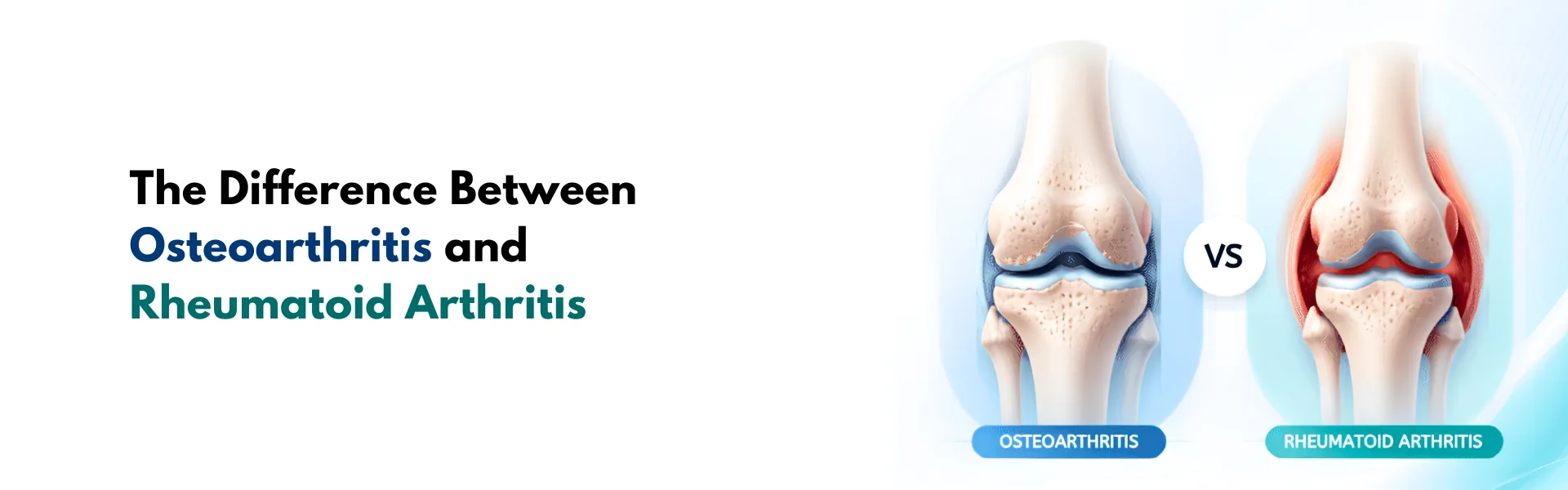
The Difference Between Osteoarthritis and Rheumatoid Arthritis
The two diseases are entirely different.
Osteoarthritis is a condition that damages the joint and surrounding tissues.
Rheumatoid arthritis is an immune-mediated disease.
Osteoarthritis:
It is a degenerative process.
It usually occurs in elderly people.
It can also affect young individuals.
Cartilage in the joints is damaged or may become depleted.
It may affect movement of the joint.
Rheumatoid arthritis:
It is a systemic illness.
It can affect people at any age.
The immune system attacks the internal lining of the joints.
It leads to erosion of the joint or bone.
Key differences:
| Osteoarthritis | Rheumatoid arthritis |
| It may affect a single/multiple joints. | Characteristically symmetrical joint involvement (affects identical joints bilaterally). |
| Morning stiffness is brief (typically < 30 minutes) and worsens with exertion. | Morning stiffness is prolonged (typically > 30 to 60 minutes) and improves with movement. |
| Involves weight-bearing joints (knees, hips, spine) as well as the distal and proximal small joints of the hands. | It may affect smaller joints in fingers and toes. |
| It is confined to the joint or the tissue around it. | It has systemic effects. |
The treatment approach in osteoarthritis:
Drugs are not available to rebuild the cartilage.
The condition can be managed by controlling symptoms:
- Relieving pain/swelling
- Preserving joint function
The treatment includes:
Topical painkiller – Creams or sprays can be applied to the joint.
It may relieve joint pain and stiffness.
Oral NSAIDs – Painkillers can be taken to reduce acute pain or swelling.
Intra-articular injections – Corticosteroids may be injected into the joint.
They help bring short-term relief.
Joint replacement – The damaged joint is replaced with an artificial implant.
The treatment approach in rheumatoid arthritis:
It consists of targeted treatment to prevent joint damage.
Disease-modifying antirheumatic drugs (DMARDs)-
These interrupt the abnormal signaling pathways that may trigger the immune system.
They suppress the immune attack.
Corticosteroids or NSAIDs – These are used to relieve acute, sharp pain.
They help bring short-term relief.
Aprazer Healthcare is a pharmaceutical medicine manufacturer focused on rheumatology medicines.
We manufacture a range of affordable rheumatology medicines.
We export rheumatology medicines to the leading international markets.
Our flagship products include:
Targeted DMARD- Tofacitinib (Tofamark)
It is an advanced treatment drug for moderate and severe rheumatoid arthritis.
It primarily blocks JAK1, JAK2, and JAK3 enzymes.
It blocks intracellular signaling.
It suppresses the immune system.
Can a person suffer from both conditions?
Rheumatoid arthritis is an autoimmune condition.
Osteoarthritis may coexist depending on:
- Advancing age
- Obesity
- Injury to the joint
- Secondary osteoarthritis (resulting from rheumatoid joint damage)
Which is more severe: Rheumatoid arthritis or Osteoarthritis?
Rheumatoid arthritis is more complex.
- It is a systemic illness.
- It affects other body functions /parts
- It causes unpredictable flare-ups and periods of remission.
Osteoarthritis can still be severe, as it causes:
- Irreversible joint damage.
- Permanent loss of joint function.
Targeted DMARDs For Rheumatoid Arthritis
Rheumatoid arthritis is a chronic autoimmune condition.
The condition can be managed through targeted treatments.
DMARDs play an important role in treating the inflammatory process.
These are disease-modifying antirheumatic drugs.
They modify the immune system, managing its abnormal activity.
They help manage inflammation in conditions such as:
Psoriasis, lupus, and rheumatoid arthritis.
They may help reduce:
- Joint swelling and pain
- Stiffness and joint mobility
- Progression of joint /bone damage
DMARDs are classified into –
- Traditional DMARDs –
These have a broad spectrum of activity.
They help reduce the inflammatory condition by several mechanisms.
Methotrexate is often used as an initial treatment.
Examples include:
- Methotrexate
- Leflunomide
- Sulfasalazine
- Hydroxychloroquine
- Biological DMARDs –
These are engineered biological molecules.
They block certain specific enzymes or cells in the immune system.
It helps lower the abnormal immune signaling.
They are used to control moderate to severe conditions.
- Targeted synthetic DMARDs –
These are small synthetic molecules.
They inhibit specific enzymes in the immune cells.
These inhibit intracellular signals.
This reduces immune system-mediated response.
Examples include:
- Tofacitinib
- Baricitinib
When may targeted DMARDs be used?
These are considered in the following cases;
- The condition is not controlled by conventional therapy.
- A person is unable to tolerate the older drugs.
- If the inflammation continues to persist.
The choice of drug is influenced by several other factors, evaluating benefits and risks.
Commonly used targeted synthetic DMARD for rheumatoid arthritis-
Tofacitinib – It is available as Tofamark, manufactured by Aprazer Healthcare.
It inhibits Janus kinases in immune cells.
It reduces the signal for the inflammatory response.
It helps control overactive JAK signals.
It helps reduce inflammation.
It also prevents further joint damage.
Methotrexate/Tofacitinib
Methotrexate is a traditional drug used as initial therapy.
Tofacitinib is a targeted DMARD used to treat uncontrolled conditions.
| Methotrexate | Tofacitinib |
| Multiple mechanisms, including interference with the folate pathway. | Targets specific enzymes |
| It is a commonly used treatment. | Used in advanced conditions |
| Can be given oral /injectable | Given orally |
| It may cause gastrointestinal side effects | It may cause upper respiratory tract side effects. |
Why is it required to regularly monitor functions while using tofacitinib?
Regular function monitoring is an important part of the treatment.
Tofacitinib may alter immunity.
It also causes changes in cholesterol and blood profiles.
Three important tests include:
- Blood cell count
- Lipid profile
Aprazer Healthcare: Manufacturing affordable Tofacitinib
Aprazer Healthcare is a pharmaceutical company manufacturing specialty drugs.
With rheumatology as our core area, we are focused on developing advanced drugs for rheumatology disorders.
Our rheumatology product portfolio includes:
- Conventional DMARDs
- Targeted DMARDs

What Factors Determine the Duration of Cancer Treatment?
The answer to this is that certain people may have short-term treatments, and for some, it may continue for years.
It becomes important that patients understand the treatment plan and duration.
The Cancer Behavior:
Cancer treatment is based on its type and behavior.
For example, a testicular cancer may require less intense treatment, and leukemia may require years of treatment.
The biology of the cancer, its growth, and treatment response help decide the treatment plan.
The Stage of the Cancer at Diagnosis:
The stage of the cancer tells the size of the tumor and its spread.
The early stages of cancer may need surgery or less intense therapy.
The higher stages may require a combination of therapies, which can take longer.
Tumor Biology and Stage:
Two people may have the same type of cancer or stage but different types of tumors.
There may be differences in the structure of cancerous cells, growth rate, hormonal changes, and genetic mutations.
A daily pill may be effective to target a specific mutation.
A rapidly growing tumor may need intense and long –term treatment.
The Type of Treatments Used-
Treatments may have different durations:
- Surgery:
It is a one-time event; it may take weeks to recover.
- Radiation therapy:
It is given in the form of daily sessions extending over several weeks.
- Chemotherapy:
It is given in cycles with a 2- to 4-week gap. It may extend to several months.
- Hormonal therapy:
It may need 5 to 10 years of treatment.
- Targeted therapy and Immunotherapy:
It can be used as long as the body responds to the treatment.
It can be used if the side effects are manageable.
Certain patients may need more than one therapy, extending the treatment duration.
Body’s Response to the Treatment:
Cancer treatment cannot be fixed or pre-decided.
The treatment is reviewed and can be modified as needed.
If the tumor responds well, the therapy may be shortened.
If it responds slowly, additional therapies or cycles may be added.
Side Effects and Patient’s Health:
Overall health and age of the patient affect the treatment type and duration.
Sometimes, severe side effects may require pausing the therapy or lowering the doses.
The older age group may have impaired body functions; they may require less intense treatment.
Such delays may lead to stretching the schedule.
Conclusion:
The timeline for cancer treatment relies on multiple variables,
such as cancer type and biology, the patient’s health, and response.
One patient cannot compare their treatment with another as it depends upon many factors.
As an oncology medicine manufacturer, we aim to empower patients by delivering clear information, alleviating unnecessary fears revolving around the treatment.
About Aprazer Healthcare-
We are a generic pharmaceutical manufacturer.
We specialize in manufacturing oncology medicines.
Our portfolio comprises a wide range of oncology orals and injectables.
We manufacture standard-quality generic medicines to enhance affordability and accessibility.
What Infections are Treated by Amoxicillin?
Amoxicillin is a penicillin-derived antibiotic.
It has a broad spectrum of activity.
It is used against a wide variety of bacterial infections.
- Respiratory infections-
Amoxicillin may be used in upper and lower respiratory tract infections.
It is mainly effective against infection caused by susceptible strains of Streptococcus pneumoniae or H. influenzae.
- Ear infections – It is one of the most common infections occurring in children.
However, it affects both young children and adults.
It is an infection caused in the middle ear.
It is accompanied by pain, fever, and temporary hearing troubles.
- Throat infections – Amoxicillin may be used to treat strep throat infection caused by Group A Streptococcus.
- Dental infections –
Amoxicillin can be used to treat infections of the oral cavity.
It may be used if clinically needed in conditions like dental abscesses or infections alongside dental procedures.
- Stomach infection –
Amoxicillin can be used in H. pylori infection in combination with other drugs.
The infections where amoxicillin is ineffective include:
As an antibacterial drug, amoxicillin is ineffective in viral infections.
- Common cold
- Influenza
- Covid-19
- Viral pharyngitis
- Atypical pneumonia caused by organisms such as Mycoplasma pneumoniae
- Infections caused by Chlamydia and Legionella species
- Amoxicillin –resistant bacterial infections
- Fungal infections
- Parasitic infections
Why must one complete the prescribed amoxicillin course?
One must follow the prescribed drug treatment, even if one feels better after a few doses.
The bacteria may remain active in the body.
Leaving the treatment early may lead to a relapse of infection.
Precautions with the use of amoxicillin-
- It is a prescription drug.
- Avoid its use in hypersensitivity to penicillin.
- Always complete the treatment course
- Seek medical help in difficult breathing, swelling in the face, or severe skin rash.
Which is the affordable brand of amoxicillin?
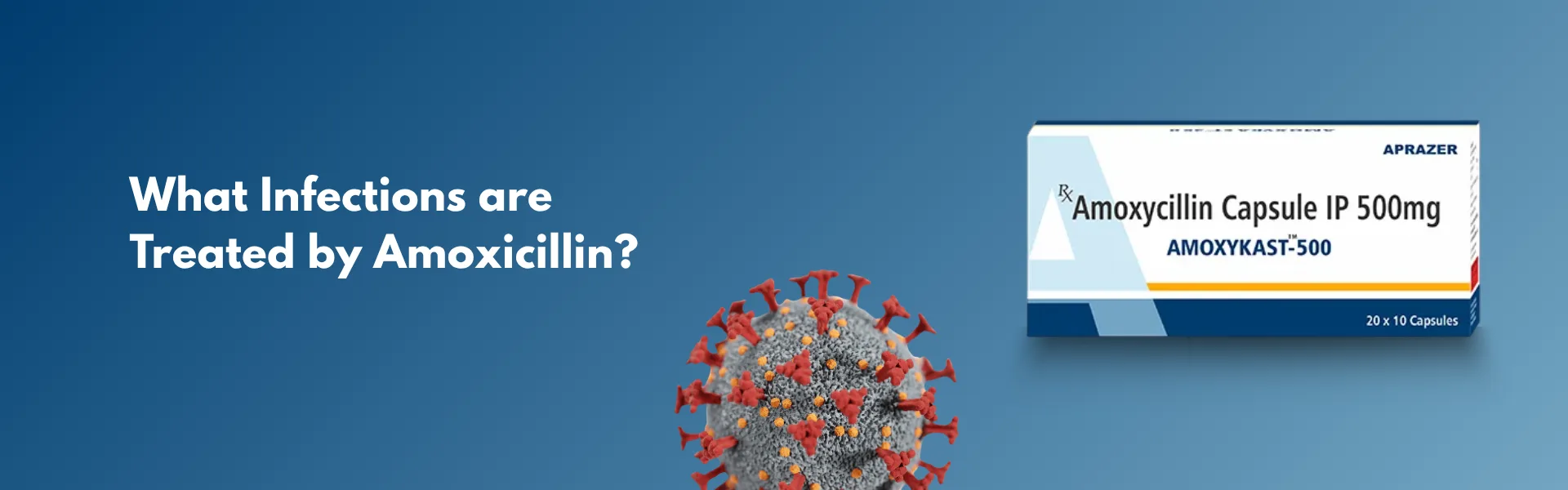
Amoxykast 500 and Amoxykast 250 are affordable amoxicillin capsules manufactured by Aprazer Healthcare.
Aprazer Healthcare is a generic drug manufacturer.
We manufacture a range of antibiotic medicines, both oral and injectable drugs.
We supply pharmaceuticals to the international markets in the Middle East, Africa, and South America.
Our portfolio comprises:
- ICU care antibiotics
- Beta-lactam antibiotics
- Macrolides
- Fluoroquinolones
- Polymyxins
What is Neuropathic Pain?
Neuropathic pain is caused by injury to the sensory nerves.
As a result, the sensory nervous system sends abnormal pain signals to the brain.
What are the symptoms of neuropathic pain?
The nerve damage may result in sensory symptoms like –
- Burning or cold sensation in the affected area
- Sudden episodes of sharp, shooting pain
- Pins-and-needles sensation
- Numbness or reduced sensation
- Extreme pain may be caused by normal stimuli
Muscle and physical symptoms:
Damage to the motor nerves may impair muscle functions.
It may lead to –
- Difficulty in walking
- Loss of balance or coordination
Autonomic symptoms:
Autonomic nerve damage may lead to:
- Dizziness
- Fainting upon standing
- Changes in bowel habits
- Abnormal sweating
What are the causes of neuropathic pain?
It is caused by injury or an illness that affects nerve signaling.
Primary causes include:
Diabetes –
High glucose levels in the blood cause oxidative stress and metabolic changes.
This damages blood vessels and the nerves.
Infections –
Certain viral infections may injure the nerve fibers, altering their function.
Physical injury –
It is damage caused to the nerves due to an accident or physical trauma.
Nerve compression –
It is a condition in which nerves may feel compression due to external pressure.
Common examples of nerve compression include –
- Carpal Tunnel Syndrome
- Herniated Disc
CNS disorders –
Certain brain or spinal cord disorders may alter pain signaling pathways.
Medication –
Certain medications may cause neurotoxic side effects, affecting nerves.
Vitamin deficiencies –
Lack of certain vitamins like B12 or vitamin B1 may affect nerve health.
Vitamin B12 is utilized by the nerve fibers to form the myelin sheath.
Chronic alcohol use –
Alcohol may cause neurotoxicity and may also impair gut absorption.
It may cause deficiency of nutrients that support nerve health.
Autoimmune disorders –
Certain autoimmune disorders trigger the immune system to attack its own body, including the nerves.
Idiopathic neuropathy –
It is a condition in which the exact cause of the nerve pain is not identifiable.
General Pain versus Nerve Pain
Generally, pain may be caused by an injury or trauma to the body tissues.
It may or may not be managed by NSAIDs or OTC painkillers.
Neuropathic pain is caused by irritation or damage to the nervous system.
It requires specific medicines that reduce abnormal nerve activity.
Medicines used for neuropathic pain –
The treatment approach for neuropathic pain focuses on calming down the overactive nerves.
The choice of medicine must be evaluated by the medical practitioner only.
The medicines include:
Anticonvulsant drugs – These are commonly used drugs for neuropathic pain.
These reduce abnormal nerve signaling.
- Gabapentin
- Pregabalin
Antidepressants – These medicines downregulate the pain signals in the brain.
- Tricyclic Antidepressants
- Serotonin-Norepinephrine Reuptake Inhibitors (SNRIs)
Sodium channel blockers (anticonvulsants) –
These medicines may help with neuropathy by reducing abnormal electrical conductivity of the nerve.
- Carbamazepine
- Oxcarbazepine
Topical medicine-
Capsaicin and anesthetics like lidocaine can be applied topically to the affected area for a localized effect.
Opioid analgesics-
Tramadol – It can be used for short-term relief if prescribed by the doctor.
At Aprazer Healthcare, we manufacture a wide range of pharmaceuticals in different therapeutic segments.
Focused on developing life–saving drugs, we aim to manufacture drugs for comprehensive treatments, including supportive care and managing chronic conditions.
Our flagship products used in neuropathic pain include:
- Pregakast M – Pregabalin and methylcobalamin
- Gabakast – Gabapentin
Our portfolio spans anticonvulsant drugs, neurology combinations, and antidepressants.