
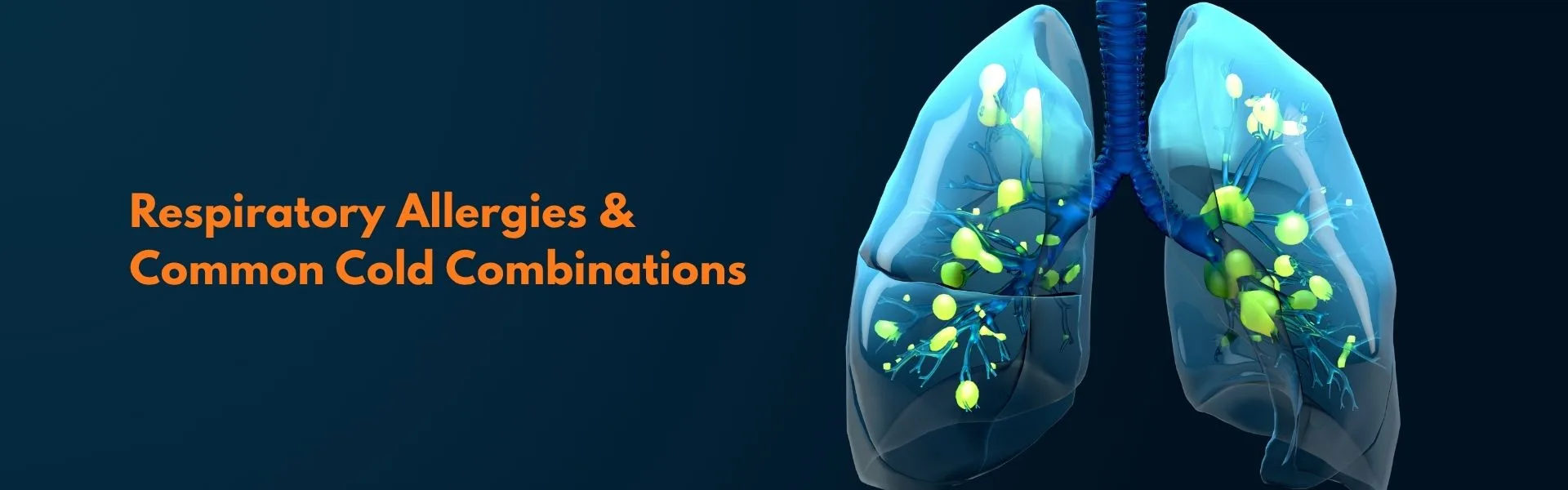
Respiratory Allergies & Common Cold Combinations
An allergy is a reaction or the body’s immune response to a stimulus.
The immune system generates antibodies against the foreign particle.
The allergy in the respiratory tract can be caused by several triggers.
- Pollen grains
- Dust mites
The common types of respiratory allergies-
Allergic rhinitis – It affects the eyes and nose.
Allergic asthma- The allergy that induces asthma flare.
Allergic conjunctivitis – It is paired with rhinitis.
It causes red, watery eyes.
Hypersensitivity pneumonia – Deeper lung inflammation due to mold/fungus infections.
Common cold versus Allergy-
Common colds are viral infections.
A cold lasts for 7 -10 days.
A low-grade fever happens with a cold.
Allergies are an immune reaction.
Allergies remain until the allergen is removed.
The symptoms of allergy include itchy, watery eyes.
Symptoms of respiratory allergy –
- Sneezing
- Runny, stuffy nose
- Itchy, watery eyes
- Persistent cough
- Wheezing and tightness in the chest
The medicines used in respiratory allergies-
Antihistamines – These are the drugs that treat allergy symptoms.
These are also used to treat digestive issues.
They work by blocking histamine.
Histamine is released during an allergy.
Nasal Corticosteroids – These reduce swelling and nasal congestion.
Bronchodilators – These dilate the bronchial muscles.
They relax the tightened airway passage.
These are used in asthmatic flare-ups.
Leukotriene Modifiers-
They block the leukotriene secretions.
Leukotriene are secreted during an allergy.
These trigger inflammation in the lungs.
These narrow down the airways and trigger mucus secretion.
Pain/fever medicines – These drugs relief the body ache and fever.
Decongestants – These are used to relieve the stuffy nose or release sinus pressure.
They shrink the blood vessels. They clear the nasal passage.
What are the triggers of respiratory allergy?
- Outdoor pollen grains
- Mold spores
- Dust mites
- Air pollution
- Smoke
- weather changes
- Strong smell
Difference between respiratory allergies and asthma –
Respiratory allergies –
These are caused in the upper respiratory tract.
It causes wheezing, cough, and runny nose.
Asthma –
It is a disease of the lower lungs.
It is a chronic airway disorder.
It leads to difficulty in breathing.
What is allergic asthma?
It is the precipitation of asthma.
Airway inflammation and breathing troubles are triggered by an allergic reaction.
It causes inflammation in the lungs.
Symptoms include –
- Shortness of breath
- Chest tightness
- Sneezing /runny nose
- Itchy eyes
Which is the leading contract pharmaceutical manufacturer for anti-allergic /cold combinations?
Aprazer Healthcare is a top-tier drug manufacturer.
We manufacture a comprehensive range of pharmaceutical formulations.
We are global drug exporters.
We supply global standard products worldwide.
We are certified WHO-GMP pharmaceutical manufacturers.
We hold an EU-GMP license for manufacturing drugs for export in European markets.
We are recognized exporters in Asia, Africa, and America.
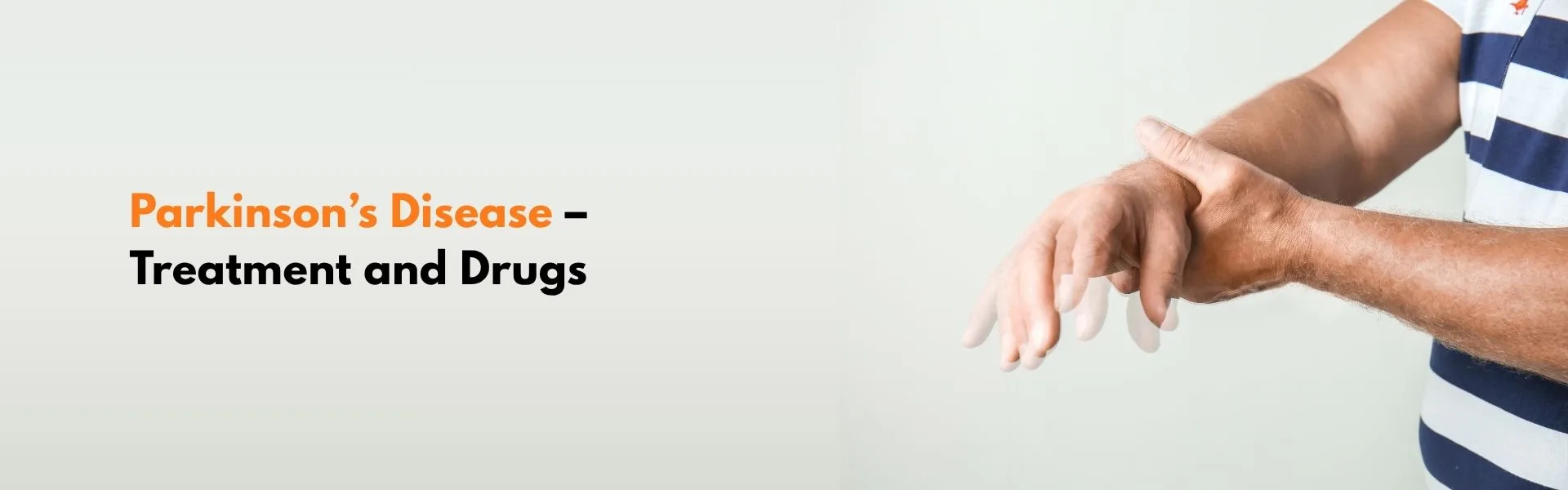
Parkinson’s disease – Treatment and Drugs
Parkinson’s is not a single disease.
It is a complex syndrome that occurs due to different biological processes.
The nerve cells in the brain stop releasing neurotransmitters.
The deficiency in chemicals affects neuron firing.
It also leads to severe cognitive changes.
What are the causes of Parkinson’s disease?
It is the slow degradation of nerve cells.
It is the loss of neurons.
It lowers chemical messengers in the brain.
It leads to loss of Dopamine/Nor-epinephrine.
It controls many body functions.
- Motor functions
- Heart rate
- Blood pressure
- Tiredness
- Sleep disturbances
Parkinson’s disease symptoms-
- Shaky movement in hands /finger.
- Slow movement, taking longer to walk/dress.
- Stiffness in the limbs
- Increased risk of fracture
- Trouble sleeping
- Constipation
- Depression
- Slurred speech
- Blurred vision
Severe complications caused by Parkinson’s disorder-
Parkinson’s disorder affects day-to-day life, affecting a person’s cognitive and physical functions.
- It affects people’s memory, language, and reasoning skills.
- Emotional instability
- Depression /anxiety
- Trouble swallowing /chewing
- Sleep disorders
- Nightmares
- BP changes
- Bladder functions
- Sexual dysfunction
- Smell loss
What are the risk factors of developing Parkinson’s disease?
- Growing Age – With age the neurons in the brain degenerate.
The risk of developing Parkinson’s increases with the growing age.
The risk is higher above 70 years of age.
- Genetics – The risk is higher in people with a family member having Parkinson’s.
- Gender – Males have a higher risk of developing it.
- Exposure to toxins-
Environmental pollution, and harmful chemicals in food.
Can Parkinson’s occur at a younger age?
Parkinson’s can affect young people.
It is mainly caused by genetic inheritance.
It is called juvenile Parkinson’s.
It is different from Parkinson’s in older people.
The disease progresses very slowly.
Young people experience more dystonia and muscular contractions.
They have fewer instances of cognitive issues.
What is the treatment for Parkinson’s disorder?
The treatment involves the restoration of dopamine and relief of the symptoms.
It includes –
- Physical/speech therapies
- Lifestyle adjustments
- Medications
The common drugs used to treat Parkinson’s disorder
- Carbidopa-levodopa-
Levodopa changes to Dopamine.
It enhances the Dopamine level in the brain.
It widely improves motor functions.
Dopamine agonist –
These mimic dopamine in the brain.
It binds to dopamine receptors; it activates the receptors.
It is used to treat –
- Parkinson
- Restless leg syndrome
- High prolactin levels
Pramipexole
- MAO-B, COMT inhibitors –
It prevents dopamine breakdown.
It is taken alongside levodopa to enhance dopamine activity.
- Selegiline
- Rasagiline
- Amantadine –
It blocks the NMDA receptor.
It decreases glutamate activity
It boosts dopamine activity.
It reduces motor function.
Other supportive medicines include –
- Antidepressants for cognitive improvement.
- Drugs for GIT and autonomic issues.
- Laxatives for severe constipation.
Do not stop taking medicine abruptly. Why?
It shows sudden withdrawal symptoms.
The immediate stopping of the medicine.
It leads to a severe drop in dopamine levels.
- Severe muscle rigidity
- Complete loss of movement
- Unstable blood pressure
- Difficulty in breathing, swallowing
- Extreme anxiety
- Panic attacks
It is advised to gradually taper the medications.
A leading Contract Pharmaceutical Manufacturer-
Aprazer Healthcare is the leading pharmaceutical manufacturer.
We manufacture world-standard drugs.
We are globally recognized, offering world-class services.
Our dealings are based on transparent communication.
- WHO-GMO/EU-GMP compliance
- Robust quality products
- Audit-ready labs
- Export-ready dossiers
- Worldwide distribution
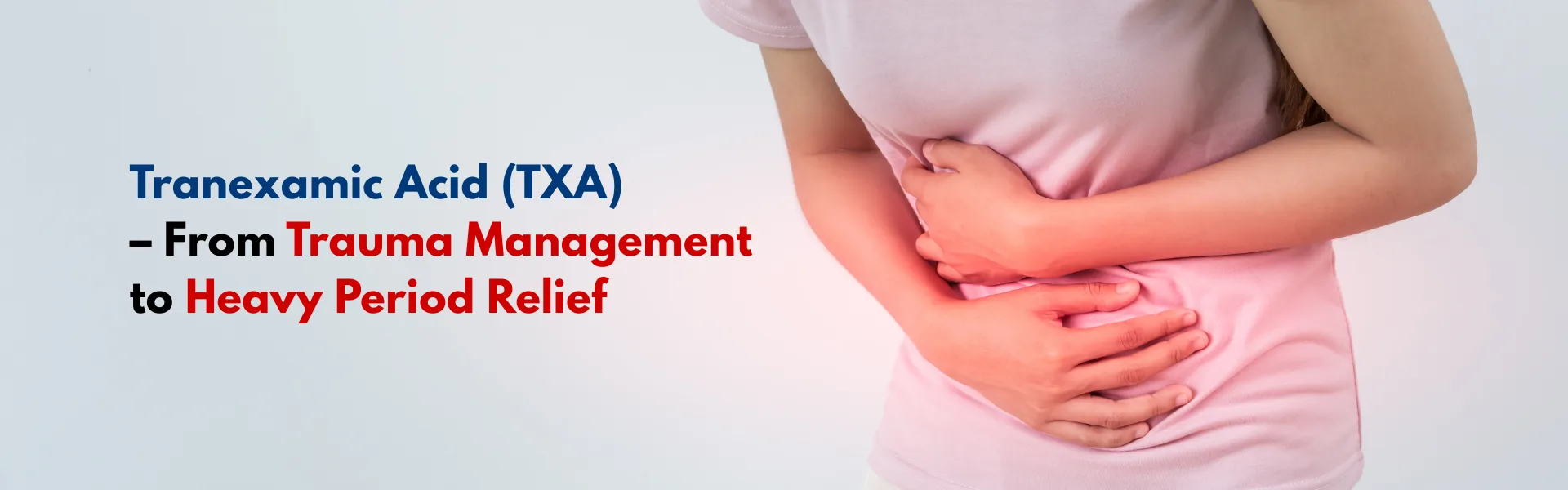
Tranexamic Acid (TXA) – From Trauma Management to Heavy Period Relief
Tranexamic acid is a synthetic derivative.
It stops the excessive bleeding.
It prevents the dissolution of the blood clot.
It is an antifibrinolytic agent.
What is Tranexamic Acid (TXA) tablet used for?
It is widely used in surgical and medical conditions.
It inhibits the breakdown of the clot.
It prevents blood loss during –
- Heavy menstrual /postpartum bleeding
- Blood loss during surgery /trauma
- Dental procedures
- Nose bleeds
Tranexamic acid working –
It inhibits the plasmin enzyme.
Plasmin helps dissolve the clots.
Blocking the enzyme promotes clot formation.
It slows down bleeding.
Clot formation prevents blood loss.
Tranexamic acid use in trauma /surgery-
Tranexamic acid is widely used in trauma or hemorrhage.
It inhibits clot breakdown. It stops excessive bleeding.
It is given intravenously during accidents or traumatic hemorrhage.
It minimizes postoperative and intraoperative blood loss.
It is applied topically at the surgical site.
It helps reduce bruising and swelling.
The role of Tranexamic acid in period management (Menorrhagia)-
It is widely prescribed to manage heavy bleeding.
It slows down the breakdown of the clots.
It prevents excessive blood loss.
It is a non-hormone treatment.
It does not alter the hormones or the menstrual cycle.
Tranexamic acid use for skin issues-
Topical Tranexamic acid is widely applied to harness its anti-inflammatory properties.
Tranexamic acid blocks the pathway of pigmentation.
It is widely used to treat –
- Skin pigmentation
- Melasma
- Skin discoloration
It brightens the skin.
It minimizes dark sunspots/age spots on the skin.
Does tranexamic acid tablet relieve pain during periods?
Tranexamic acid does not help manage pain during periods.
It just prevents heavy bleeding and blood loss.
Tranexamic acid side effects –
The common side effects include-
- Headache
- Nasal congestion
- Muscle pain, joint pain
- Nausea
- Diarrhea
- Severe weakness
Serious side effects –
- Blood clot in the lungs, arms, etc.
- Trouble breathing
- Blurred vision
- Severe allergic rashes
- Stroke /heart issue
The third-party pharmaceutical manufacturer – A global export partner
Aprazer Healthcare is a pharmaceutical manufacturing company.
We manufacture a diverse range of life-saving medicines.
We are a trusted third-party drug manufacturer and exporter.
Our product portfolio includes-
We are a leading pharmaceutical company trusted by global exporters.
We export high-quality products to countries in Asia, Africa, and America.
Which is The Top Anti-Infective Drug Manufacturer in India?
Aprazer Healthcare manufactures a comprehensive range of anti-infective drugs.
Leveraging modern infrastructure, Aprazer Healthcare specializes in manufacturing complex dosage formulations.
We manufacture specialized dosage forms including all types of tablets and capsules.
Our extensive anti-infective product portfolio includes-
- Antibiotic combinations
- Antifungal drugs
- Antiviral drugs
- Anthelmintic drugs
Our flagship products include-
- Apraketo – Ketoconazole tablets
- Azithrokast 500– Azithromycin 500mg
- Ciprokast 500 – Ciprofloxacin 500mg
- Zerquan – Praziquantel
Manufacturing a complete range of antiviral drugs, Aprazer Healthcare is the leading manufacturer of –
- Antiretroviral combinations for HIV.
- Hepatitis B antivirals
- DDAs for Hepatitis C
Aprazer Healthcare is the leading contract drug manufacturing organization for anti-infective drugs. Why?
Regulatory compliance –
WHO-GMP and EU-GMP certified manufacturing units.
We have a long track record of manufacturing global quality drugs.
Our regulatory expertise, easily navigate export challenges.
Quality Assurance –
Adherence to regulatory standards, maintaining sterility and precision.
- Advanced air-handling systems
- Separate blocks for beta-lactam antibiotics.
- Environmental controls
- Uniformity of content
- Precise dose formulations
- In-house quality checks
- Pharmaco-vigilance and data integration.
Robust distribution network-
Aprazer Healthcare is the top supplier of anti-infective drugs in America, Africa, and Asia.
From procuring raw material to end-mile distribution, we have a transparent supply chain.
- Authentic supply logistics
- Cold chain supply
Extensive product portfolio – our widest portfolio includes all antibiotics and antivirals.
Crisis resilience – we remain crisis-ready in manufacturing large-scale anti-infective during an epidemic.
Scalable production – we are capable of manufacturing large-scale and small-scale batches.
Cost–effective manufacturing – Leveraging advanced technology and automated systems, we focus on preventing wastage and lowering production costs.
Why is precision required in manufacturing anti-infective drugs?
Unlike other generic formulations, anti-infective drugs need precise doses.
These directly target the viable microbes.
Any fluctuation in dosage may lead to failure of treatment.
The low doses may not achieve the required efficacy.
Higher doses may lead to toxicity.
It also increases the risk of antimicrobial drug resistance.
Why complete a full course of antibiotic drugs?
Leaving the antibiotic course in the middle may lead to re-infection.
An incomplete course may not be effective in killing the complete bacterial count.
It also leads to drug resistance; the microbes mutate and may not respond to the same drug.
Why trust Aprazer Healthcare?
Aprazer Healthcare is a trusted contract pharmaceutical manufacturer.
Our core values of transparency/streamlined work processes define us as a trusted CMO from India for global brands.
Partner with Aprazer Healthcare-secure your effective drug supplies.
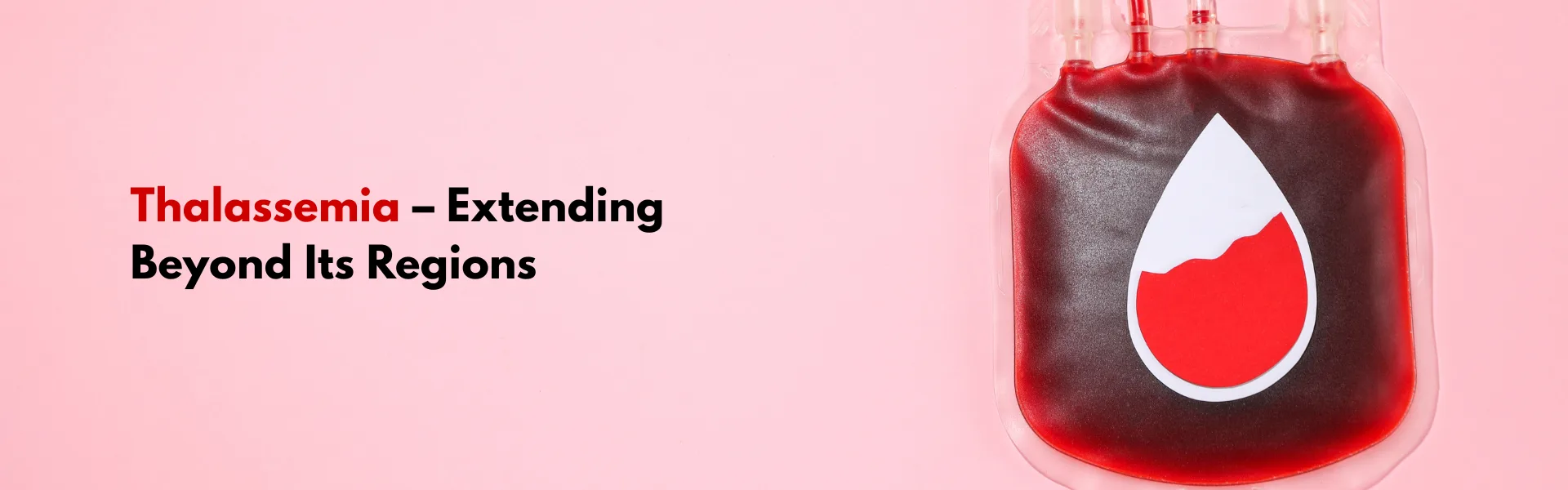
The Need For Early Diagnosis in Thalassemia
Thalassemia is an inherited blood disorder.
It occurs at birth. The condition is misdiagnosed as jaundice or any other disorder.
Without proper treatment in childhood, it significantly retards growth.
Treatment during the early years can reduce lifelong complications.
At Aprazer Healthcare (pharmaceutical manufacturer), we believe genetic disorders managed or treated promptly can prevent long –term complications.
Recognizing the symptoms at the earliest eases management enhance cure.
As the leading drug manufacturer, we are focused on developing advanced treatment drugs for chronic disorders.
With our strong global presence, we are a leading drug distributor to major countries.
The forms of Thalassemia –
Mild Thalassemia: It occurs without symptoms, causing mild anemia.
It mimics iron deficiency.
Individuals are prescribed unnecessary iron supplements.
The person does not require any specific treatment.
Moderate Thalassemia-
It is usually diagnosed in adulthood or late childhood.
It is mistaken for chronic weakness.
Untreated thalassemia leads to the formation of gallstones.
Chronic leg ulcers and iron buildup in the organs.
Severe Thalassemia –
In a severe condition, symptoms appear in the first 6 to 24 months.
It inhibits the growth of children.
It distorts the physical structure.
It leads to enlarged organs.
Heart and liver failure.
What are the early symptoms of thalassemia to be traced?
The early symptoms appear at 3 to 6 months of age.
The symptoms become highly pronounced by the age of 2.
- Pale skin, lips, and palms
- Avoidance of taking a feed
- Mild jaundice
- Weak child
- Dark urine
- Abdominal swelling
Symptoms in adulthood-
- Chronic fatigue
- Slow growth
- Delayed puberty
- Frequent infections
How to treat Thalassemia?
Minor thalassemia –
No major surgery or intervention is required.
A person can live a healthy, complication-free life.
It causes mild, borderline anemia.
Symptom monitoring and various wellness strategies are effective to prevent any complications.
Major thalassemia –
It requires surgery like a bone marrow transplant, splenectomy, etc.
Regular blood transfusions are required in moderate to major disease.
Iron supplements are not recommended in thalassemia. Why?
Blood cells in thalassemia mimic iron deficiency.
The blood cells formed are small and very few.
It is caused by the genetic deformity.
Taking iron supplements increases the iron load in the body.
Excess iron damages build up in the organs.
It severely affects the heart, liver, and endocrine glands.
Lifestyle and Dietary support to manage thalassemia-
Avoid unnecessary iron supplements-
It can damage the organs.
Iron supplements must be taken after identifying the exact iron deficiency.
They must be taken upon a doctor’s prescription.
Folic supplements-
It helps build healthy blood cells in the bone marrow.
Proper diet-
Avoid high iron rich diet.
Use vitamin C and calcium-rich foods.
Avoid infections and illnesses –
Severe illness can stress out the bone marrow.
It can sharply reduce hemoglobin levels.
Importance of proper reproductive care and family planning –
The parents must be screened for thalassemia.
A recessive trait in both the parents increases the risk of developing major thalassemia in the newborn.
If one parent has a recessive gene, it is likely the newborn will develop mild conditions.
Alternative pregnancy methods may be utilized.
Aprazer Healthcare is focused on defeating chronic health conditions through timely intervention and treatment.

Sterile Manufacturing Process for Oncology Injectables
These require stringent quality controls and regulatory adherence.
Chemotherapy is usually given in the form of injectables or infusions.
What are sterile injectables?
Sterile injectables are drugs administered by injection.
They are sterile preparations, free from pyrogen or any other microorganism.
It includes –
- Intravenous injections
- IV infusions
- Intramuscular injection
- Subcutaneous injection
The need for sterility in Injectables-
The drugs are directly administered into the bloodstream.
They have rapid effects. These bypass the first-pass metabolism.
Any contamination may directly lead to severe health risks.
What are the benefits of injectables?
- These bypass the GIT.
- 100 percent bioavailability
- Rapid action
- No GIT side effects
What is the sterile manufacturing process for oncology injectables?
- Aseptic manufacturing –
The drugs are mixed or processed in sterile closed-loop conditions.
- Sterile raw material
- Pyrogen-free water
- Environmental controls
- Containment control
Personnel safety –
The working people must be protected from cytotoxic agents.
- Use protective gear and clothing.
- Air lock-lock systems
- Access restrictions
- Sterilization and filtration –
The products are filtered to remove particulate matter.
The glass vials are washed and depyrogenated.
Rubber stoppers are sterilized.
- Aseptic fill finish /lyophilisation-
The sterile liquid preparations are dispensed in sterile vials or containers in an aseptic chamber.
The injectable flow is unidirectional.
The filling process should be free from any contamination.
The heat-sensitive oncology drugs are half-stoppered in the vials.
These are transferred to freeze–dryers to remove water.
The aluminum seals are crimped onto the vials immediately removing from the freeze dryers.
The sealing must be done in protected air zones to prevent contamination.
- Quality control and inspection –
The vials are inspected for leaks or particulate matter.
Container closure integrity.
Sterility testing/bacterial endotoxin testing.
WHO – GMP Regulations for sterile injectable manufacturing
The GMP standards emphasized:
- Product quality
- Sterility control
- Manufacturing consistency
- Regulatory compliance
EU-GMP regulations for sterile injectable manufacturing
EU-GMP practices emphasize-
- Cleanroom classification
- Personnel controls
- Contamination prevention
- Environment monitoring
- Air barriers
Why choose Aprazer Healthcare for oncology injectables?
Aprazer Healthcare is the leading oncology injectable manufacturer.
We are global oncology drug exporters.
We are equipped with world-class infrastructure.
We are accepted and trusted due to our quality attributes-
- Global Manufacturing standards
- Rigorous quality controls
- Regulatory compliance
- Containment prevention
- Cost-efficient manufacturing

Allergic Rhinitis (Hay Fever) – Treatment and Medicines
It is an irritation caused by a stimulus.
It is irritation and inflammation in the nose.
The tiny particles are breathed.
They irritate the inner nose lining, causing a flare reaction.
It releases histamine.
What are the Hay fever symptoms?
- Stuffy nose /runny nose
- Sneezing
- Itchiness in nose and eyes
- Mucus falling in the throat
- Tiredness
- Sinus pressures
What are the types of rhinitis?
Allergic rhinitis – It is nasal inflammation triggered by allergens.
Non-allergic rhinitis- It is triggered by weather changes, spicy foods, and strong smells.
Infectious rhinitis – It is caused by viral infections.
Is hay fever a real fever?
It is called hay fever because the allergy occurs due to hay.
Pollen, dust, etc. It does not cause fever directly.
The fever is caused by infection or cold, etc.
Difference between cold and hay fever-
Cold /Flu is an infection caused by a virus.
Hay fever is caused by an allergic reaction.
The allergy lasts until the allergen is in the environment.
It usually happens in the season of the pollen grains.
Allergic rhinitis /hay fever medicines-
Antihistamines –
They block the histamine receptors.
Histamine is released by the body (due to an allergy).
- Cetirizine
- Fexofenadine
- Loratadine
Nasal corticosteroids-
They help manage moderate to severe rhinitis.
They work directly into the nose.
It reduces nasal inflammation or swelling and mucus.
- Fluticasone propionate
- Budesonide
Decongestants –
These thin down the viscous mucus.
Mucus is excessively produced due to allergy.
- Pseudoephedrine
- Oxymetazoline
Leukotriene inhibitors-
These block the nasal inflammation.
- Montelukast
- Zafirlukast
How to prevent allergic rhinitis?
- Identify the triggers.
- Minimizing exposure.
- Keep the windows closed.
- Practice daily saline irrigation.
- Use intranasal corticosteroids.
- Practice cleaning habits
- Avoid smoking
- Wear sunglasses
- Avoid contact with pets
Allergic rhinitis can induce an asthma flare. How?
Rhinitis irritates the nose and eyes.
It affects the airway system.
The air is inhaled through the mouth.
The air is not warmed in the lungs and irritates the bronchi.
It may cause inflammation of the airway system.
It can cause an allergic flare.
The Third–party pharmaceutical manufacturer and the leading distributor-
Aprazer Healthcare is a global pharmaceutical manufacturer company.
We manufacture a range of global quality products.
Our product portfolio includes a wide range of drugs.
- Anti-Histamines
- Anti-Allergic & Common Cold Combinations
We are WHO –GMP certified and globally recognized.
Accredited by the EU-GMP, we are the leading drug suppliers to the Middle East markets.
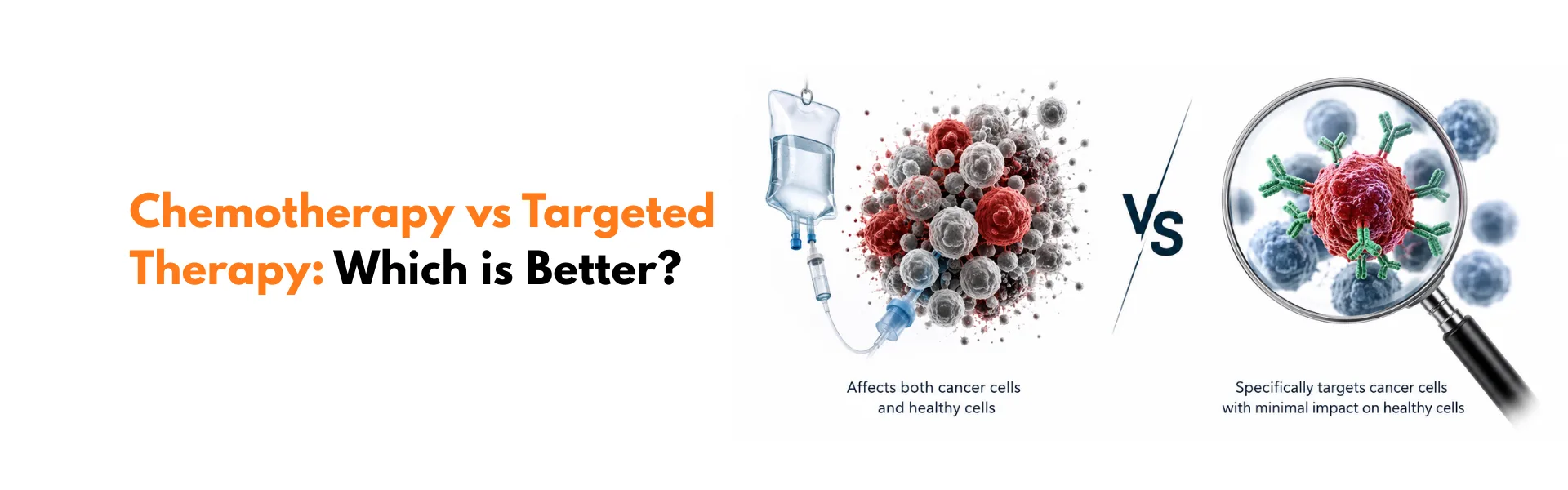
Chemotherapy vs Targeted Therapy: Which is Better?
Chemotherapy and targeted therapy form the base of cancer treatment.
These are the systemic anti- cancer therapies.
The toxic drug agent circulates through the bloodstream.
Targeted therapy is precision drug therapy.
It targets the tumor site and the cancer cells.
It is used for specific genetic mutations.
It offers fewer side effects.
Chemotherapy drugs equally affect healthy/cancerous cells.
It is highly effective for fast-growing cancers.
It offers more severe side effects.
Chemotherapy and its uses-
These are the cytotoxic agents that kill the rapidly dividing cells, damaging the DNA.
The primary goal of using chemotherapy drugs is-
- Eliminate the cancer cells
- Prevent the spread of cancer cells to other organs
- Prevent recurrence of cancer
Chemotherapy is exclusively used in –
- Acute leukemia
- Aggressive lymphomas
- Small cell lung cancers
- Triple–negative breast cancer
Targeted therapy and its uses-
These are the cytotoxic drugs that target specific enzymes in cancer cells.
These target the cancer cell cycle.
The primary therapeutic goal of using targeted therapy drugs is-
- Starving the tumor cells
- Blocking the growth signals
- Enhancing the immune system
- Deliver targeted destruction
It is exclusively used in –
- Non-small cell lung cancer
- HER2-positive cancers
- BRCA1/BRCA2 reproductive system cancers
- Myeloid leukemia
Benefits and side effects of chemotherapy-
These offer broader protection.
These are widely used for –
- Fast-growing tumors
- Widespread cancers
- Highly mutating cancer cells
Common side effects include –
- Weakness
- Hair loss
- Bone marrow suppression
- Digestive issues
- Mouth ulcers
- Nerve damage
- Chemo brain
Benefits and side effects of Targeted therapy-
Targeted therapy drugs are used to target specific enzymes.
They are widely used to target –
- Localized tumors
- Specific mutations in the cancer
- Specific stage of the cancer
The common side effects include –
- Skin /nail changes
- Fatigue
- Diarrhea
- High Blood pressure
- Liver impairment
- Delayed wound healing
Which are the chemotherapy drugs?
- Cisplatin- Cycokast-50
- Capecitabine – Capekast
- Paclitaxel – Paclikast 260
- Doxorubicin – Dorucin
- Etoposide – Posiact
Which are the targeted therapy drugs?
- Imatinib – Imatikast 500
- Dasatinib – Dasakast 70
- Olaparib – Olabir
Which is the largest oncology medicine manufacturer?
Aprazer Healthcare is the leading anticancer drug manufacturer.
We are a global pharmaceutical company, specializing in manufacturing oncology orals and oncology injectables.
We are the top exporters of oncology medicine worldwide.
Accredited by the global health authorities, we manufacture top-quality anticancer drugs accepted and preferred worldwide.
What is Pharmaceutical Contract Manufacturing? A Complete Guide
In this, the drugs are not manufactured by the owner company but are manufactured by another company.
The manufacturer company holds global licenses.
It ensures quality and regulatory compliance.
The owner holds the right to sell and market the products.
What is a Contract Development and Manufacturing Organization (CDMO)?
It is the manufacturing process from drug discovery to finished dosage formulation.
It involves a rigorous research and drug development process.
It includes the clinical trial process/ complete drug design.
The benefits of contract pharmaceutical manufacturing for global exporters-
Contract manufacturing helps global exporters save the cost of production.
- Eliminates the need for heavy investments
- It reduces regulatory burdens
- It leads to faster market access.
- Scalable production
How to select the best pharmaceutical contract manufacturer?
Making informed decisions fixes the need and alleviates unnecessary uncertainties.
Manufacturing Infrastructure-
The manufacturer must implement advanced manufacturing processes.
- In-house laboratories
- Advanced instruments
- Automated systems
- Sterility and containment facilities
- Qualified utilities
Regulatory compliance-
The exporters must ensure the regulatory-compliant manufacturing facilities.
The manufacturing unit must be WHO-GMP and ISO compliant.
For marketing products in strict markets, the manufacturers must hold country-specific regulatory certifications.
Quality Assurance –
The manufacturer must ensure strict regulatory adherence.
They must be able to provide-
- Batch analysis certificates
- Real-time stability testing data
- Ensure batch consistency
- Raw material quality
Manufacturing capabilities /capacity –
The dedicated facilities for toxic drug manufacturing.
Sterility and containment procedures.
The company must be able to manufacture advanced dosage formulations.
Sterile injectables, orals, and solid dosage forms.
Understand the capacity or the volume of manufacturing.
Confidentiality –
The manufacturing company must protect the proprietary rights of the owner company.
It must preserve the formula and the brand rights of the company.
Supply chain Efficiency –
- Proper logistic management
- Traceable supply chain
- Integrated cold chain
Transparency –
The manufacturer must manage transparency at all manufacturing steps.
From procuring raw material, raw material quality, and finished product quality, the supply chain must be transparent and documented.
Affordability without compromising quality –
The manufacturer must balance affordability and quality.
Global standard products must be manufactured without compromising quality.
Implementing new technology and automated processes maintains quality and also minimizes wastage.
Which is the globally recognized pharmaceutical contract manufacturer from India?
Aprazer Healthcare is a renowned pharmaceutical contract manufacturer from India.
We are built on a long-standing reputation of zero non-compliant audit history.
Our manufacturing unit adheres to WHO-GMP /EU-GMP standards.
Leveraging advanced technology, we are capable of manufacturing a comprehensive drug class.
Our extensive product portfolio spans –
Our core values that make us the leaders in contract drug manufacturing-
- Cost transparency
- Global compliance
- Fair MOQs
- Consistent quality
- Robust costumer services
- Regulatory expertise

WHO-GMP vs EU-GMP: The Important Difference
It consists of the international /universal standards of product quality /safety.
It is the basic requirement for all manufacturers to implement GMP.
EU-GMP focuses on essential GMP controls along with country-specific regulations.
This includes additional regional regulatory qualifications.
WHO-GMP manufacturing –
It is the global authority that forms the backbone of the regulatory framework.
The core principles remain consistent across the globe.
It is a basic requirement that ensures product safety and quality.
The GMP goals include –
- Safeguards patient safety
- Ensures product quality
- It forms the base of regulatory approvals
- Reduces the risk of product recall.
EU-GMP manufacturing –
It is European Union Good Manufacturing Practices.
This includes the specifications for the sale of drugs in Europe.
Along with the basic GMP principles, EU-GMP includes variations in regulatory frameworks.
It is the difference in methodology –
- Variation in audits
- Documentation structure
- Quality systems
What are WHO-GMP regulations?
The GMP guidelines ensure consistent product quality in accordance with the intended use.
It includes-
- Process of manufacturing
- Raw material
- Training facilities
- Documentation
- Distribution
What are EU-GMP regulations?
These regulations apply to manufacturers, exporters, and distributors.
These are mandatory requirements for the sale of medicines in Europe.
These lay strong emphasis on –
- Pharmaceutical quality systems
- Risk management
- Documentation /traceability
- Trained professionals
Is the WHO-GMP standard of manufacturing enough for global export?
WHO-GMP is applicable in many countries.
However, the highly regulated market requires additional inspections and approvals.
The countries where only WHO-GMP is eligible –
It is highly beneficial for low-income countries, ensuring product quality.
It is acceptable in countries in Africa, the Middle East, and parts of Asia.
It also forms the basis of drug qualification by the UN and International health agencies.
The countries that require additional approvals –
The additional regulatory frameworks are required in –
UK, USA, and European markets.
These are the stringent markets.
They individually assess the manufacturing facilities.
They enforce distinct local documentation based on the region.
Which is the WHO-GMP /EU-GMP certified pharmaceutical manufacturer?
Aprazer Healthcare is the leading pharmaceutical company from India.
It specializes in manufacturing GMP-compliant drugs.
We are the leading drug supplier to the international market.
Our regulatory team has expertise in drug approvals in different targeted markets, technical standards, and documentation demands.
Implementing cutting–edge technical flow, our manufacturing units are compliant with EU regulatory norms, providing complete documentation and regulatory support.
Our fully automated systems hold a zero-tolerance stance on data gaps, favoring EU-GMP steep technological requirements.