
The Next Pandemic Risk? How Changing Global Weather is Driving the Rise in Malaria Cases

The reasons for rising malaria –
Global warming –
The rising temperature in the cold temperate regions offers favorable space for propagation.
Drift into new latitudes –
The changes in the season.
Warmer winters and the extended summers cause a shift in mosquito breeding, spreading into new areas.
New invasive species– the stagnant waters and urban water tanks, pollution, etc. introduce genetic variation, emerging new invasive species.
The increased use of pesticides/chemicals – This increases drug resistance.
The malarial parasite develops genetic changes and more resistant variants.
What are the malaria symptoms?
- Fever and chills
- Body ache sand joint pain
- Nausea, vomiting
- Systemic fatigue
Serious symptoms –
If malaria is left untreated.
It can lead to severe organ failure and even death.
- Altered consciousness
- Difficulty in breathing
- Severe anemia
- Jaundice
- Acute organ failure
- Dark urine
- Low blood sugars
The cause of Malaria –
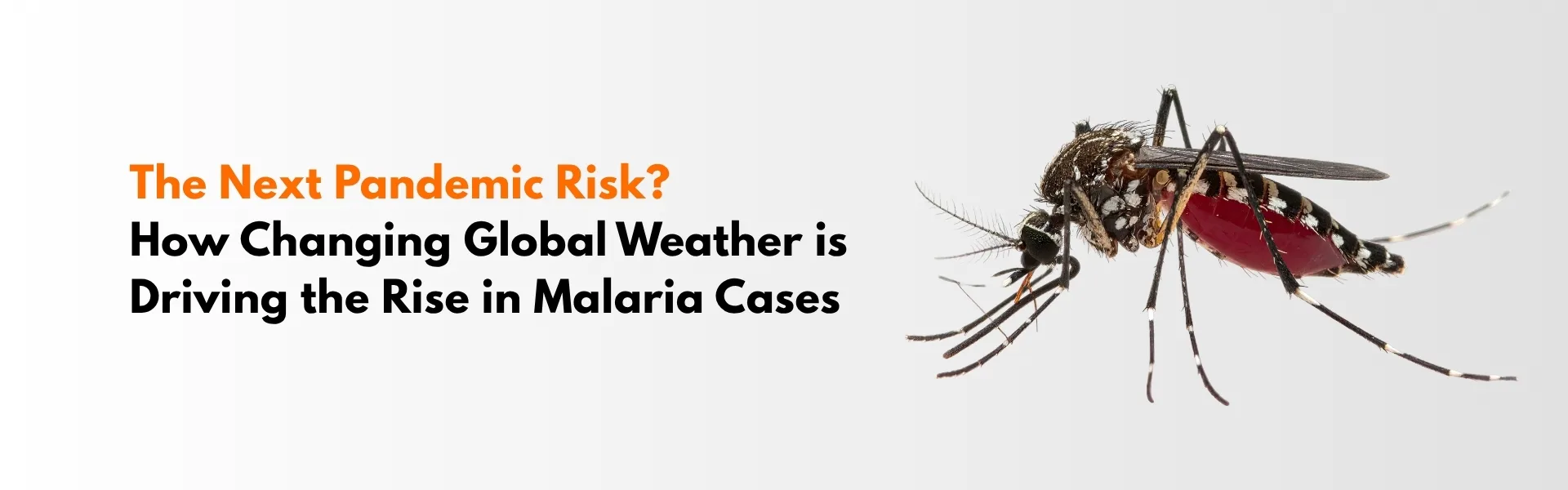
It is caused by the bite of an infected mosquito (female Anopheles).
How is malaria transferred?
The mosquito carries the parasite.
By biting another healthy person, it transfers into the other person.
Malaria is also transmitted by blood-to-blood contact.
Sharing needles or infected blood.
How to prevent malaria?
Avoid mosquito bites and breeding grounds.
- Use insect repellants
- Sleep under bed nets
- Cover the skin
- Avoid outdoor movements in the evening
- Clear standing waters
- Use sprays
Can malaria spread from a pregnant mother to the child?
It is a very rare condition for malaria to get directly transmitted.
However, malaria may cause several birth defects.
- Still birth
- Miscarriage
- Premature delivery
- low birth rate
What are anti-malarial medicines?
The malaria drug therapy depends upon the type of causative species.
- Artemisinin-based Combination Therapies (ACTs)
These are used to treat uncomplicated malaria.
The fast-acting artemisinic drug is combined with a slow-acting drug.
It efficiently clears the parasite and prevents drug resistance.
- Artemether-lumefantrine
- Artesunate-mefloquine
- Chloroquine Phosphate- It is used for non-falciparum species
- Atovaquone-proguanil – These are widely used to prevent relapse.
It eliminates the dormant malarial parasites, hidden in the liver.
The leading pharmaceutical manufacturer for antimalarial drugs
Aprazer Healthcare is a leading contract drug manufacturer.
As a leading drug exporter, we export a wide range of anti-malarial drugs.
To combat the malarial crises /pandemic, we are committed to manufacturing affordable anti- malarial drugs.
- Large-scale manufacturing unit
- Adherence to global health standards
- Regulatory-compliant drugs
We have a strong distribution network, supplying drugs worldwide.
Our flagship products include –
- Artemether + Lumefantrine
- Hydroxychloroquine Sulphate
- Mefloquine 250mg
- Quinine 300mg
Collaborating with the global health centers and public health sectors, we are committed to providing equitable access to all.