
Do Organ Transplant Patients Need Lifelong Medication?

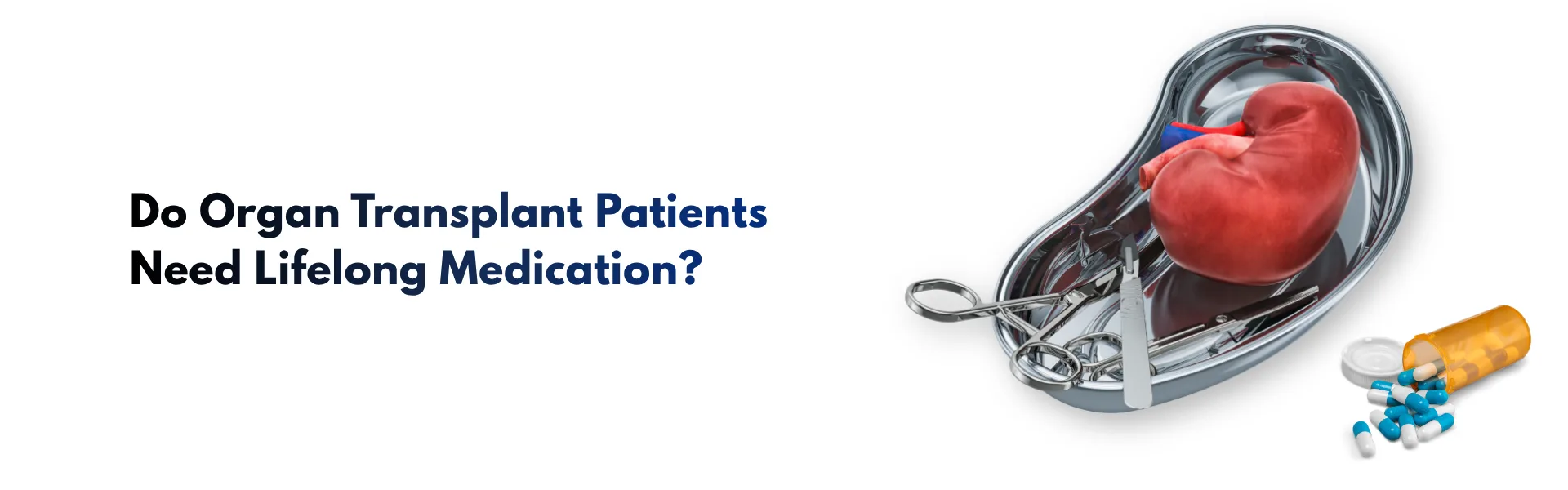
However, the doses or treatment plan may evolve depending on the patient’s health.
The Role of Anti-rejection Medicines after a Transplant:
The immune system of the body views the new organ as a foreign object.
This may increase the risk of rejection of the graft.
The anti-rejection medicines are given to suppress the immune attack on the new graft.
Intensive drug therapy may be needed initially to prevent the risk of rejection after the surgery.
Later, the treatment may be followed by oral medication for long-term maintenance.
Medicines used in organ transplantation-
Calcineurin inhibitors-
These reduce the activation of T-cells and lower the immune response.
These are commonly used in heart, kidney, and liver transplants.
Examples of drugs include:
- Tacrolimus
- Cyclosporine
Corticosteroids-
These reduce inflammation and also suppress the immune response.
Examples include:
- Prednisone and prednisolone
- Methylprednisolone
Antimetabolites-
These work by interfering with immune cell activation pathways.
These are commonly given in combination with calcineurin inhibitors or corticosteroids.
The common drugs include:
- Mycophenolate mofetil
- Azathioprine
mTOR Inhibitors-
They interfere with cell growth and proliferation.
These inhibit mTOR signaling.
They prevent immune cell replication.
Common examples include:
- Sirolimus
- Everolimus
Other medicines that may be used after organ transplant include:
- Antivirals
- Antibiotics
- Blood pressure medicines
- Gastrointestinal medicines
At Aprazer Healthcare, we aim to manufacture affordable immunosuppressants to reduce the financial burden of expensive transplant treatment.
We are a nephrology medicine manufacturer.
We manufacture a range of targeted medicines for kidney disorders, including kidney transplant medicines.
Our portfolio includes a comprehensive range of general and specialty medicines.
We are one of the recognized exporters of nephrology medicines.
Difference between acute organ rejection and chronic organ rejection –
Acute organ rejection is a sudden, aggressive immune response to the graft.
An acute attack may be treatable and needs immediate treatment.
Chronic rejection is a gradual process.
The graft may get damaged progressively over the years.
It may be asymptomatic at initial stages.
Can I miss or change immunosuppressive drug regimen on my own?
Patients must not change or stop the medicine on their own.
If the dose is reduced or missed, it may increase the risk of organ rejection.
Excessive doses of immunosuppressants may increase the risk of infection and drug toxicity.
Patients must inform the doctor about all the medicines or OTC drugs they are using.
Parameters that must be regularly monitored –
Certain rejection episodes may cause mild or no symptoms.
This necessitates regular monitoring of organ functions and drug levels.
The common functions to be assessed include:
- Kidney function
- Liver function
- Blood counts
- Drug-level monitoring
- Cardiovascular functions
- Metabolic health
Common symptoms that may occur due to graft rejection:
- Fever
- Extreme weakness
- Pain and tenderness in the region of the graft
- Fluid retention or swelling
- Organ-specific dysfunction