
Oral Chemotherapy versus IV Chemotherapy

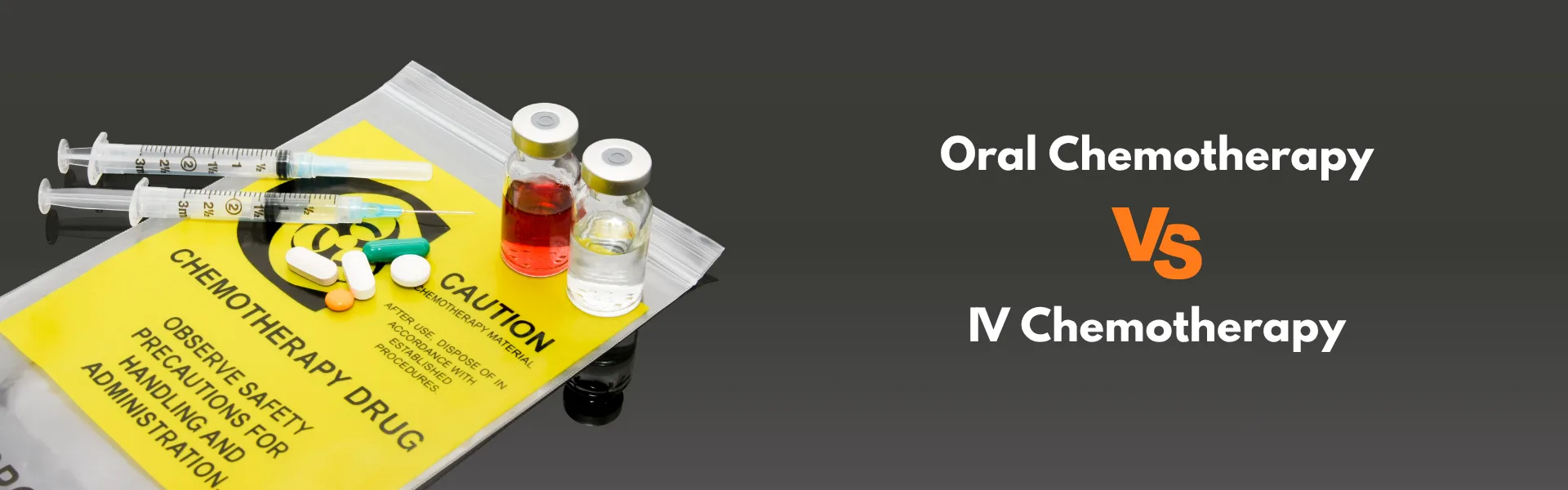
IV chemotherapy is the delivery of drugs through the intravenous route.
The choice between oral and IV administration is evaluated by the doctor based on the type/spread of cancer and the patient’s condition.
When is chemotherapy given orally?
The oral treatment may be given as primary treatment or used for long–term maintenance therapy.
Certain oral chemotherapy drugs may be used alongside radiation therapy as required for the treatment.
Many targeted cancer drugs are available in oral formulations.
When is chemotherapy given intravenously?
Some of the chemotherapy medicines are not available in oral forms.
IV chemotherapy may be used to treat advanced or metastatic cancer.
The drugs are added directly into the bloodstream.
This helps circulate the drug throughout the body.
IV infusion may be used when controlled, slow administration of the chemotherapy is required.
It may be used when oral therapy may not be available or suitable.
Common examples of oral chemotherapy medicines –
- Capecitabine
- Cyclophosphamide
- Temozolomide
- Etoposide
Common examples of IV chemotherapy drugs include:
- Cisplatin
- Carboplatin
- Paclitaxel
- Docetaxel
- Doxorubicin
As a generic drug manufacturer, Aprazer Healthcare manufactures a range of affordable anticancer medicines.
Our portfolio comprises oral anticancer drugs and chemotherapy injections.
The top- selling anticancer drugs manufactured by Aprazer Healthcare include:
- Etoposide 100mg/5ml injection – Posiact
- Capecitabine 500mg tablets – Capekast
- Carboplatin injection available in two strengths –
Carboplatin 150mg/45ml – Carbokast-150
Carboplatin 450mg/45ml – Carbokast 450
Are the side effects caused by oral or IV chemotherapy different?
The chemotherapy aims to kill cancer cells or inhibit cancer growth.
The different anticancer drugs have distinct mechanisms of action.
The drugs administered through different routes may show similar side-effects.
However, the severity of the side effects may vary depending upon several factors like dosage, patient’s condition.
The oral medicines may not be suitable for people having issues with swallowing.
Certain cytotoxic drugs may irritate the vein when administered intravenously.
The common side effects include:
- Nausea
- Vomiting
- Fatigue
- Hair loss
- Reduced blood count
- Mouth sores