
GERD (Gastroesophageal Reflux Disease)- Symptoms and Causes

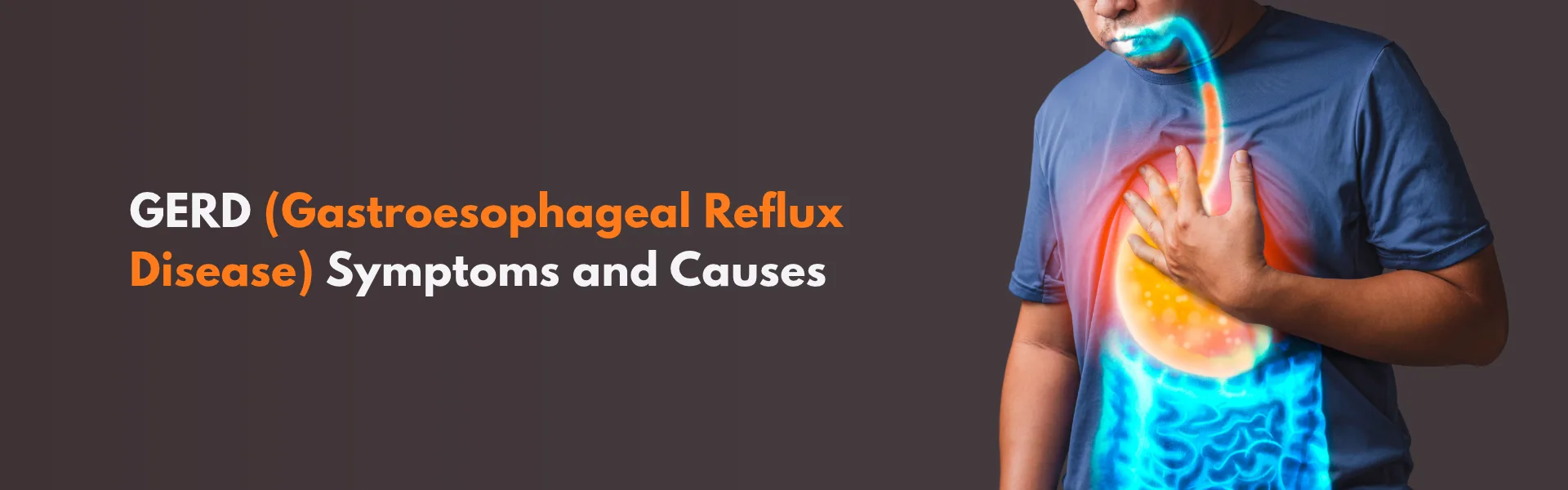
It is a chronic digestive system disorder.
In this condition, stomach contents flow back into the esophagus, and sometimes up into the throat or mouth.
Long-term or persistent acid reflux may lead to irritation of the esophageal lining.
It may damage the esophageal lining.
Are acid reflux and GERD the same?
Acid reflux is typically an occasional, temporary occurrence.
GERD is a chronic condition in which repeated backflow of stomach contents causes persistent symptoms or damage to the esophagus.
Symptoms of GERD-
- Heartburn
- Acidic taste in the mouth.
- Tightness or pressure in the chest
- Difficulty in swallowing
- Sensation of a lump in the throat
- Nausea
- Sore throat
- Chronic cough
- Asthma-like symptoms
What are the causes of GERD?
The stomach contents may flow backward due to improper functioning of the lower esophageal sphincter.
The valve lies at the junction of the esophagus and the stomach, supported by the diaphragm.
It acts as a one-way valve.
It opens and closes in response to swallowing.
The conditions that may impair the functioning of the lower esophageal sphincter include:
Hiatal Hernia:
A part of the stomach may get pushed upwards.
It moves through an opening in the diaphragm.
The risk is higher with increasing age.
It may cause reflux of stomach contents.
Brief LES relaxations:
It is a condition in which the LES relaxes on its own.
It happens more frequently in people with GERD.
Impaired contractions of esophageal muscle:
It is caused when the esophageal muscles do not contract properly.
This can impair the clearance of swallowed food and refluxed contents (refluxate) back down into the stomach.
Factors that may increase the risk of GERD:
- Excess body weight
- Pregnancy
- Smoking
- Diet triggers
- Certain medications
How is GERD treated?
It is managed by a multistep process including:
- Dietary changes
- Modifying daily habits
- Medication to relieve acid reflux symptoms
- Surgical methods
Medicines used in GERD –
The drugs are used to relieve acid symptoms and reduce irritation.
- Antacids – They help neutralize the acid in the stomach.
These may be used for infrequent acid reflux.
- H2 receptor antagonists- These inhibit gastric acid secretion caused by H2 receptor stimulation.
- Proton pump inhibitors –
They reduce acid production in the stomach.
These inhibit the pumps that produce acid.
- Prokinetic agents-
These are not used routinely.
They may be used in selected people only.
They increase motility of the gut.
They hasten gastric emptying.
Aprazer Healthcare – Gastroenterology Medicine manufacturer
Aprazer Healthcare is a pharmaceutical company with an established portfolio and expertise in gastroenterology care.
We are one of the recognized gastroenterology drug exporters from India.
We offer a wide range of gastroenterology medicines, including:
- Proton pump inhibitors
- H2 receptor antagonists
- Hepatoprotectant medicines
FAQs:
Can acid reflux flare up at night?
Lying down may reduce the pull of gravity on stomach contents.
It may cause backflow of stomach contents.
Why can stress increase my symptoms?
Anxiety may worsen GERD symptoms.
It increases sensitivity to pain.
It may distort gut-brain signaling.
Why does it cause chest pain?
Chest pain in GERD may feel like cardiac pain.
It may be due to irritation or spasm in the esophagus.
Which medicines may trigger or worsen the condition?
- Certain NSAIDs
- Some blood pressure medicines like calcium channel blockers
- Certain sedatives such as benzodiazepines
- Certain asthma medicines
- Tricyclic antidepressants