
Diabetes Treatment and Drugs
Explaining Diabetes-
It is a chronic condition.
It is a condition in which blood sugar rises exceptionally high.
The body is not able to make insulin or use it in the right way.
- Type 1 Diabetes-
It is also called childhood diabetes.
The pancreatic cells are unable to produce insulin.
The autoimmune disorder damages the pancreatic cells.
- Type 2 Diabetes – It is a chronic condition.
Unable to utilize insulin, glucose levels build up in the body.
Diabetes symptoms –
- Frequent urination
- Excessive thirst
- Unusual weight loss
- Increased appetite
- Blurry vision
- Frequent infections
Type-1 diabetes causes-
The immune system attacks its own body cells.
It is usually –
- Hereditary condition
- Triggered by environmental toxins
Type-2 diabetes causes –
Insulin resistance-
The body cells are not able to respond to insulin.
Low insulin production –
The pancreas is unable to produce enough insulin.
The important causes include –
- Family history
- Obesity
- Sedentary lifestyle
- Age above 45 years
- Underlying health conditions
Type 2 diabetes drugs –
Biguanides- Metformin
GLP-1 Receptor Agonists-
Semaglutide, Tirzepatide
SGLT2 Inhibitors-
Dapagliflozin, empagliflozin
Sulfonylureas- Glipizide, glimepiride
DPP-4 Inhibitors-
Sitagliptin, Linagliptin
Different types of insulin for type-1 diabetes-
Bolus insulin
- Rapid-acting insulin
- Short-acting insulin
Basal Insulin
- Intermediate-acting insulin
- Long acting /ultra long acting insulin
Premixed Insulin
It is a combination of rapid acting insulin and intermediate insulin.
Can I cure my Type-2 diabetes?
Type-2 diabetes is manageable.
Sugar levels can be controlled.
It cannot be cured permanently.
One can attain remission by managing constant sugar levels.
What is the working of type-2 diabetes drugs?
Type -2 drugs work in 3 ways-
- Reduce sugar production in the liver
- Stimulate insulin release
- Increase insulin sensitivity
Is diabetes manageable?
The excessive sugar levels can be managed and lowered to the controlled limits.
It requires effective management strategy-
- Daily Monitoring and Care
- Diet and Lifestyle
What are the warning sugar levels?
- Prediabetes fasting – 100 – 125 mg /dl
- Diabetes fasting – 126 mg /dl
- Low blood glucose – 70 mg/dl
What is HbA1c?
It is the average blood sugar level measured over a period of 3 months.
The third-party manufacturer for Anti-Diabetic Combination-
Aprazer Healthcare is the top pharmaceutical manufacturer.
Manufacturing global quality products, we are the drug suppliers worldwide.
We export a range of products to Asia, Africa, and America.
Our antidiabetic combination manufacturer products include-
- Linagliptin 2.5mg/5mg + Dapagliflozin 5/10mg
- Dapagliflozin 5/10mg
Why choose us?
- WHO-GMP /EU-GMP certified manufacturing facilities
- Robust quality controls
- Global distribution
- Cost-effective manufacturing

Rheumatology Disease and Medicines: A Complete Guide
Rheumatology
Rheumatic diseases-
These are autoimmune disorders.
The immune system starts to attack the body.
It causes incredible pain and inflammation in joints.
- Autoimmune arthritis
- Musculoskeletal inflammation
- Systemic Lupus Erythematosus
- Sjögren’s Syndrome
- Chronic gout
- Ankylosing Spondylitis
- Fibromyalgia
The common rheumatology disorder-
Rheumatoid arthritis – affects millions of people worldwide.
It is a progressive joint destruction and systemic inflammation.
It leads to significant physical disability.
It significantly affects women.
What can be rheumatoid arthritis symptoms?
- Chronic fatigue
- Chronic pain
- Joint pain
- Stiffness
- Swelling
- Joint inflammation
Does rheumatoid arthritis only affect the joints?
It is not confined to joints.
It leads to systemic inflammation.
It affects the entire body.
- Eyes /mouth – Dry mouth, irritation in the eyes.
- Lungs – Tissue scarring and shortness of breath.
- Skin – lumps under the skin
- Blood – Anemia /chronic fatigue
The role of corticosteroids in rheumatoid arthritis-
These drugs widely bridge the treatment.
These are widely used to manage inflammation.
They reduce sudden flare-ups.
These slow down the joint damage and reduce tenderness.
What are rheumatology medicines?
Rheumatology drugs are specialty care medicines.
These drugs are used to treat joint and immune system disorders.
The rheumatology drug regimen includes –
- Traditional DMARDS
- Biological treatments
- Anti-inflammatory drugs
DMARDs – These are disease-modifying drugs.
These are widely used to treat inflammatory and autoimmune conditions.
These calm down the overactive immune system.
It stops the physical damage to the joints.
The drugs include –
- Methotrexate- Trexazer 50 mg
- Hydroxychloroquine- Hqkast 200
- Sulfasalazine and Leflunomide
Biological inhibitors –
These are complex drugs grown from living cell sources.
They block specific proteins.
It reduces the immune activity, reducing inflammation.
Tofamark – Tofacitinib 5mg
Symptomatic relief medicines-
- Pain killers – These are the NSAIDs and pain-relieving drugs.
They are widely used to bring symptomatic relief to pain or inflammation in the joints and cartilage.
- Corticosteroids-
These are powerful immunosuppressants.
They are anti-inflammatory. These are steroidal in nature and bring quick short-term relief.
Which are the widely used rheumatology medicines?
Which is the leading rheumatology drug manufacturer?
Aprazer Healthcare is a pharmaceutical manufacturer.
We specialize in manufacturing rheumatology drugs.
Adhering to WHO-GMP and EU-GMP, we manufacture global standard pharmaceutical products.
We are the leading rheumatology drug exporter.
Our extensive product range includes-
- DMARD drugs
- Immunosuppressive agents
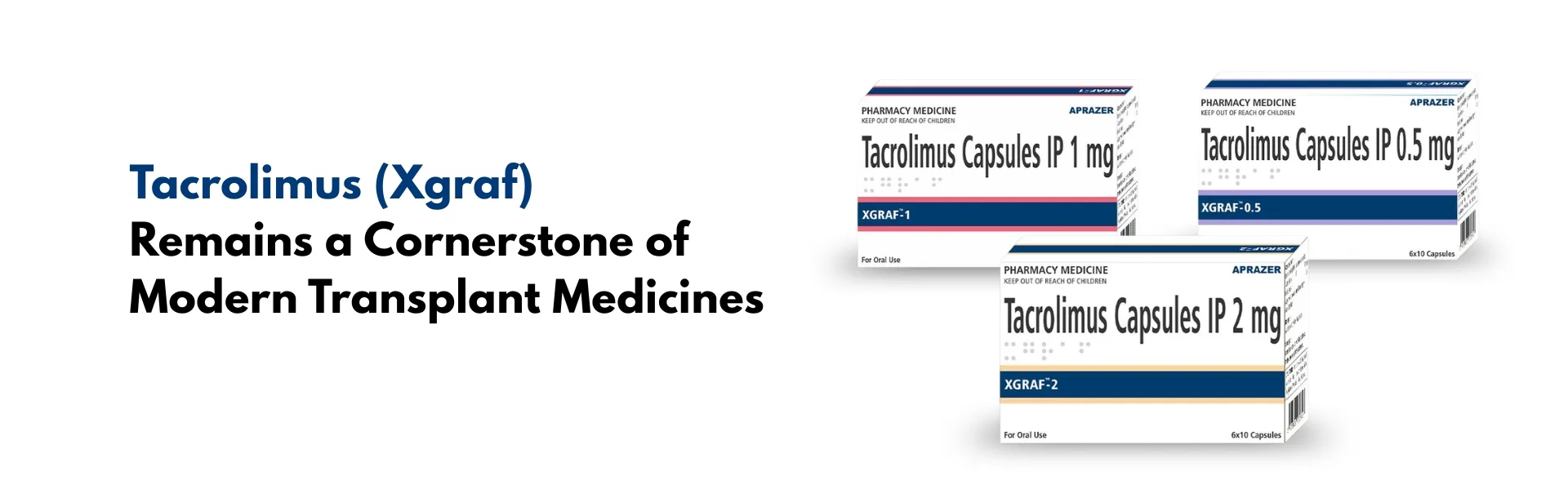
Tacrolimus (Xgraf) Remains a Cornerstone of Modern Transplant Medicines
Tacrolimus (Xgraf) is a strong immunosuppressant.
It is prescribed worldwide, preventing acute graft rejection.
Improving long-term outcomes, it is the mainstay immunosuppressive treatment drug used in post-kidney transplantation management.
- Reduces the risk of acute rejection by 30- 40 percent.
- Lowers the risk of graft loss by 44 percent (six months of use).
Xgraf (tacrolimus), manufactured by Aprazer Healthcare, is a highly affordable, globally available tacrolimus brand.
Tacrolimus tablets manufactured by Aprazer Healthcare are available in 3 strengths-
As a leading nephrology medicine manufacturer, Aprazer Healthcare manufactures a diverse range of immunosuppressants widely used in kidney transplantation.
Manufacturing precision-dose drugs with uncompromised quality, Aprazer Healthcare is a globally trusted brand for immunosuppressants.
We are the top drug exporter for immunosuppressive agents worldwide.
What is the working of Tacrolimus (Xgraf)?
It suppresses the activation of T-cells.
It calms down the immune system.
It prevents immune activity against the foreign organ.
It has targeted action suppressing white blood cells.
Why is Tacrolimus (Xgraf) a first-line drug for transplant prevention?
Tacrolimus is a gold standard drug –
- More potent than old cyclosporine.
- Prevents acute rejection episodes.
- Offers long-term graft protection.
- Fewer cosmetic side effects
Other uses of Tacrolimus(X-Graf) –
It is widely used to treat severe autoimmune conditions.
- Rheumatoid arthritis
- Nephrotic syndromes
- Severe skin allergies
- Eczema
Why is regular blood monitoring required with Tacrolimus (X-Graf)?
Besides its wide utility, Tacrolimus has a narrow therapeutic window.
It has low safety margins.
A slight increase in dose can be life –threatening.
It may induce toxicity or lead to graft rejection.
Blood levels of the drug are measured 12 hours after the dose and immediately before the next dose.
Fluctuating drug levels can lead to –
- under- immunosuppressive effect
- over- immunosuppressive effects
What are the notable side effects of Tacrolimus (X-Graf)?
Tacrolimus significantly constricts the blood vessels
It reduces blood circulation/flow.
Renal toxicity – The use of tacrolimus can cause acute kidney injury.
The long –term use leads to reduced blood supply to the nephrons.
It leads to chronic kidney injury.
Post-transplant diabetes-
It damages the pancreatic cells, elevating sugar levels.
High blood pressure – It causes narrowing of the blood vessels and also activates the sympathetic nervous system, raising the blood pressure.
Risk of severe infections- Targeting the white blood cells, lowers the body’s immunity.
It lowers resistance against infections.
Neurotoxicity- The drug reaches the brain.
It irritates the peripheral nerves.
Leads to shaky movements/tingling sensations.
Why choose Aprazer Healthcare for immunosuppressive agents?
Aprazer Healthcare is the leading generic drug manufacturer.
- WHO-GMP-certified manufacturing
- Precision dose formulations
- Stringent quality controls
- Robust distribution network

Aprazer Healthcare – A Trusted Exporter to Key Pharma Markets
Indian pharmaceutical exports serve as a lifeline, enabling access to essential healthcare.
The Quick facts-
- India ranks as the 3rd largest pharmaceutical drug manufacturer.
- Accounts for 20 % of global generic exports.
- India supplies 70 % of the world’s antiretrovirals.
- India forms the backbone of GLOBAL immunization, supplying 60 % of the total vaccines to UNICEF /WHO.
At Aprazer Healthcare (leading pharmaceutical manufacturer in India), we manufacture a global range of lifesaving medicines.
As a leading drug exporter from India, we are trusted for world–class quality and stringent regulatory compliance.
Implementing cutting–edge technology, we specialize in manufacturing complex formulations.
Our export portfolio includes –
- Anticancer drugs
- Hepatitis B medicines
- Hepatitis C medicines
- HIV medicines
Key markets for Pharma exports –
- North America –
It is a global hub for pharmaceutical trade.
Driven by heavy domestic demand, it relies heavily on foreign generic imports.
Pharmaceutical exports to North American countries exceed $123 billion.
India accounts for roughly 13 to $ 15 billion in drug exports.
It is the top supplier of affordable generic drugs.
The key imports include –
- finished dosage formulations
- complex generics
- biosimilars
- Europe union and UK
These are highly regulated markets.
They demand exceptional quality assurance.
Key imports include API and generic drugs.
India supplies 33% of total generic prescriptions in the UK.
Europe’s pharma market is expected to reach €400 billion by 2027.
Germany, the UK, and the Netherlands are the leading entry ports for continental distribution.
- Latin America (Brazil, Mexico)
It is a rapidly expanding market.
Brazil and Mexico are the leading importers of bioequivalent generics.
South and Central America heavily rely on generic imports for –
API, Bulk drugs, diabetes, and cardiovascular drugs.
- Africa (South Africa, Kenya, Nigeria)
The African market is projected to grow between $34 billion and $70+ billion over the next decade.
Africa is a high-volume pharmaceutical market.
It deeply relies on imported products.
The key medicines of export include –
Antimalarials, antibiotics, vaccines, and anti-retrovirals.
It is the target of healthcare programs by UNICEF and WHO.
- The Middle East –
These are the Gulf nations that demand premium formulations.
The global drug export in the Middle East is expected to reach $50 billion by 2026.
The key import products include –
OTC drugs, branded generics, and specialty care medicines.
Due to simplified regulatory pathways, it is the destination for branded product lines.
- South East Asia –
These countries rely on Indian pharmaceutical imports.
India serves as the best cost-effective drug source in comparison to Western markets.
Vietnam, the Philippines, Myanmar, and Indonesia are the top destinations for export.
ASEAN regulatory framework accepts WHO-GMP baseline compliance.
- CIS and Russia –
Russia accounts for major Pharma imports from India, scaling to $55.7 million in immunological treatments.
The unified single dossier framework eases Indian drug approvals.
The international ICH-compliant trials done in India are now recognized and accepted by the CIS countries.
It streamlines access to other markets –
Belarus, Kazakhstan, Kyrgyzstan, and Armenia.
The key Medicines Exported from India
Oncology drugs –
India supplies 60 percent of global generic anticancer drugs.
India supplies anti-cancer drugs to 120 + countries.
The key exports include –
Tyrosine kinase inhibitors and chemotherapy injections.
Antiinfectives (Antibiotics and antimalarials)-
This is the largest volume segment.
The key drugs include-
cephalosporins, penicillins, and macrolides.
18-20 percent of global antibiotic volume is exported by India
Neurological medicine /pain killers –
The massive worldwide demand for OTC painkillers drives high export volumes.
The key drugs of export include the NSAIDs, antidepressants, and the anticonvulsants.
Cardiovascular drugs –
Indian exports cover 12 -14 % of the global cardiovascular drug market.
The drug exports include – statins, ACE-inhibitors, beta-blockers , calcium channel blocker.
Antivirals and antiretrovirals – India is the leading exporter of HIV drugs in high disease burden areas.
Antidiabetic drugs – The chronic illness projecting a global crisis.
The export volume is dominated by metformin and oral hypoglycemic.
GIT medicines –
India manufactures and exports a wide variety of GIT medicines.
The key exports include – proton pump inhibitors, H2 blockers and antacids.
Why is Aprazer Healthcare a trusted drug exporter?
- Regulatory compliance
- Assured quality
- Robust Supply chain
- Global distribution
- Wide product portfolio
- Transparent communication
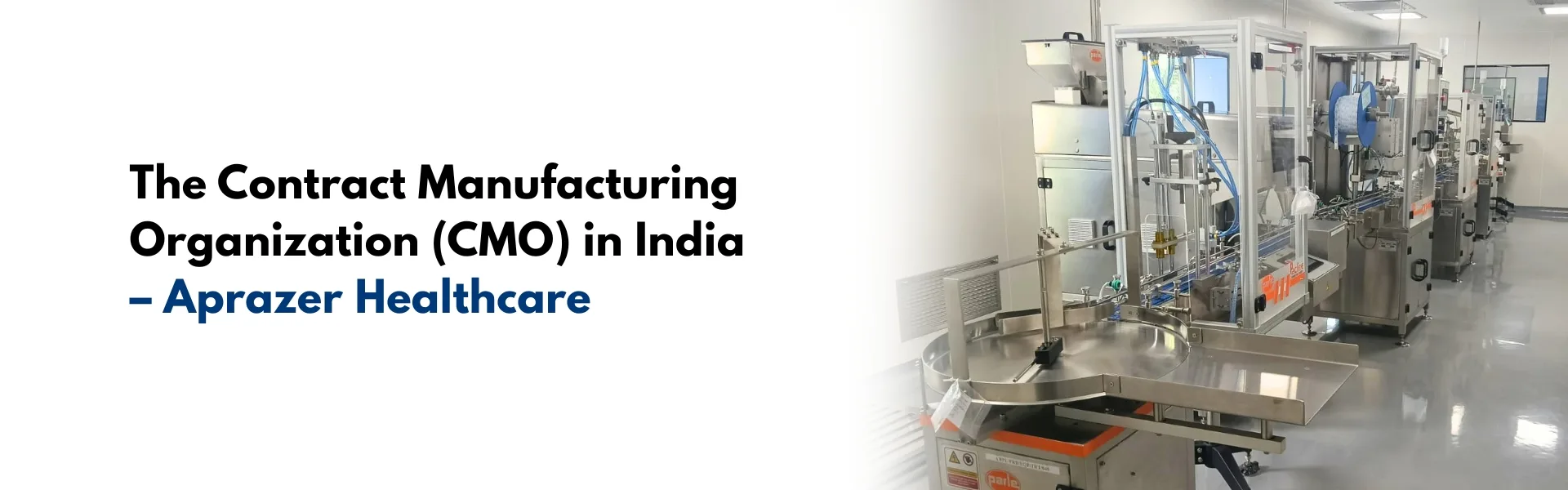
The Contract Manufacturing Organization (CMO) in India – Aprazer Healthcare
Our oral solid manufacturing plant, established at Haridwar (700, OOO sq. feet), equipped with modern technology, is capable of manufacturing versatile solid dosage formulations.
We manufacture all types of tablets/capsules.
- Modified release tablets /capsules
- Enteric coated tablets
- Film-coated tablets
- Sugar-coated tablets
- Liquid-filled hard capsules
- Acid-resistant capsules
- Soft/hard gelatin capsules
- HPMC capsules
What is meant by CMO in the pharmaceutical industry?
CMOs are drug manufacturing companies. These manufacture the drug based on formulas provided by the contract party.
These manufacture drugs on behalf of other organizations under a defined contractual agreement.
The core process of CMOs working involves –
- Product specifications / material procurement
- Regulatory compliance
- Quality management
- IP protection
- Supply chain continuity risks
- Optimizing cost and capacity
Why are CMOs beneficial for the leading brands?
CMO’s focus on scaling up production.
- Prevents drug shortages.
- Aligns with the drug demand
- Eliminates the cost of infrastructure
- Safeguards brand integrity through scalable productions
- Reduces supply chain responsibility
- Enhances market growth
- Faster product entry to the market.
Why is Aprazer Healthcare the right CMO for your pharmaceutical products?
Proven Expertise and Experience –
Our expert leaders from the core technical background exhibit leadership in manufacturing advanced generic drugs.
Having more than a decade of experience in manufacturing world–class generics, our leaders share a unique blend of expertise in understanding formulations /chemistries.
Operational Excellence –
Enduring technical advancements, we specialize in manufacturing complex products, sterile and difficult oral dosage formulations.
- Low –dose uniformity
- Taste masking
- Modified-release drugs
Risk assessment to prevent wastage or ruining of batches.
- Running pilot batches before commercial supply.
- Automated workflow
Quality and compliance –
We have a track record of spotless audit history.
- Strict adherence to Good Manufacturing Practices.
- WHO-GMP certified /EU-GMP certified manufacturing units.
- In- house testing
- Complete batch manufacturing record.
Robust distribution network
We have an advanced distribution network ensuring product integrity/safety.
- Cold chain supply logistics
- Real-time tracking
- Automated inventory systems
- complete regulatory compliance
Transparent Communication –
Our core values stand on building long-term trust.
- Transparent dealings
- sharing true data
- Protecting proprietary client formulas and data.
Understanding the urgency and demand for the products, we are flexible in our working times and also ready to implement new technology to deliver consignments on time.
With our collaborative approach to solving hurdles in the supply chain or manufacturing, we are a trusted pharmaceutical CMO worldwide.
Aprazer Healthcare – The Leading Oral Solid Dosage Manufacturer from India
Aprazer Healthcare ranks as the leading drug manufacturer.
With a decade-long experience in manufacturing global standard hepatology and oncology drugs and flexible manufacturing capabilities, sets us apart as the leading oral solid dose contract manufacturer.
What are oral solid dosage formulations?
Oral dose formulations are medicines to be ingested orally.
These are solid formulations such as –
Tablets, capsules, and powders.
They are swallowed or dissolved in the mouth.
These travel through the gut for absorption.
What are the different types of oral solid dosage formulations?
The oral solid dosage forms include the –
Tablets – These are the compressed drug formulations.
The API and the excipients are pressed to form smooth tablets.
The advanced dosage formulation comprises the modified release tablets.
Tablets based on release pattern –
- Immediate release tablets-
These are compressed tablets that release the drug directly into the bloodstream.
- Sustained release tablets – The drug is released slowly with time.
- Controlled release tablets– The drug is released at the predetermined rate.
- Extended release tablets– Prolonged drug release over an extended period of time.
The tablets are also coated differently to target release or to mask the taste.
Capsules – The powdered drug is dispensed into capsule shells.
The different types of capsule shells are the hard gelatin capsule and soft gelatin capsules.
The hard gelatin capsules encapsulate powdered drugs and pellets.
The soft gel capsules are used to dispense liquid formulations.
Based on release profile, these are classified as –
Immediate release capsules – These lead to release of the medication to the stomach.
Extended release capsules – These lead to drug release over an extended period.
What are the benefits of oral solid dosage formulations?
- Patient compliance/safety
- Longer shelf life
- Uniformity in content
- Flexible release
- Low cost
- High stability
- portability
- logistic simplicity
Why choose Aprazer Healthcare for OSD drug manufacturing?
Aprazer Healthcare is a globally chosen pharmaceutical manufacturer.
Having a track record of compliance with zero history of audit failure, we are highly trusted and accepted.
Regulatory compliance –
We strictly adhere to the international regulatory standards.
Our manufacturing facilities are WHO-GMP /EU-GMP compliant.
Advanced manufacturing capabilities –
Leveraging advanced technology, we are capable of manufacturing advanced drug formulations.
- Small-scale sample batches
- High volume productions
- Dedicated blocks for high potency drugs or hormones.
Reliable supply chain –
- Authentic raw material sourcing
- Dedicated production lines
- Closed system transfers
- Cold chain supply
Transparent cost and Long –term viability
- We ensure transparent values and costs.
- No hidden charges.
- Affordable cost
- Uncompromised quality.
FAQs
Which is the leading third-party tablet manufacturer from India?
Aprazer Healthcare manufactures a comprehensive range of tablets.
All types of modified-release tablets.
Which is the leading third-party capsule manufacturer from India?
Aprazer Healthcare leads in manufacturing advanced capsule dose formulations.
Gastro-retentive capsules
Modified release capsules

Best Third-Party Oncology Medicine Manufacturer for your Brand – Aprazer Healthcare
- Providing end-to-end solutions for your oncology brand.
- Leveraging scientific integrity and operational quality excellence.
- Regulatory-compliant manufacturing processes.
- Extensive product portfolio – chemotherapy drugs to advanced targeted therapy medicines.
Why is Aprazer Healthcare the leading third-party oncology medicine manufacturer for global exporters?
Aprazer Healthcare stands as a leading partner for manufacturing global standard drugs.
Regulatory Excellence –
We are fully compliant with the international regulatory bodies – WHO –GMP/EU-GMP.
Our regulatory team has expertise in providing end-to-end support from drug approvals to logistic documents.
Specialized infrastructure-
Isolated lines and restricted access barriers for manufacturing potent /toxic drugs.
- Air handling systems – Multi-stage HVAC systems with HEPA filtration.
- Cross–contamination prevention – Closed–system material transfers, utilizing automated isolation technology.
Advanced formulation manufacturing –
We specialize in manufacturing complex oncology formulations-
- Nanoparticle /lyophilized formulations.
- Enzyme therapeutic agents
- immunotherapeutic products
Scalable production –
We are capable of manufacturing small batches for clinical sample trials to large-scale volumes.
Traceable supply chain –
We are aligned with globally certified API manufacturers.
From sourcing raw material to finished product formation, each step is verified and traceable.
Affordable manufacturing –
Strategic resource allocation and optimized our workflow.
Our automated, continuous manufacturing processes minimize wastage.
Robust quality control parameters-
- Tested and verified quality raw materials.
- Stringent handling protocols
- In–house testing
- Strict sterility parameters
- Qualified utilities
- Validated equipment /instruments
Robust documentation support –
Our regulatory team maintains audit–ready documents.
- Drug master files
- CTD dossier for international registrations
- Initial drug approvals to global logistics documents.
Extensive dossier product list-
We manufacture a global range of oncology orals and injectables.
- Chemotherapy drugs
- Hormone therapy drugs
- Targeted therapy drugs
Our flagship products –
- Carbokast-450mg – Carboplatin 450mg
- Cytarzer 500mg – Cytarabine 500 mg
- Acalakast 100mg – Acalabrutinib -100 mg
- Indenza 140 – Enzalutamide
- Anzakast – Anastrozole
Research and drug development-
Besides manufacturing generic drugs, we invests heavily on drug development and research.
We are focused on manufacturing new drug dosage forms and complex generics.
Why choose Aprazer Healthcare for your oncology product brand?
Aprazer Healthcare manufactures a comprehensive range of oncology drugs.
We are the leading oncology medicine exporter from India.
Manufacturing global quality products, we offer complete regulatory support.
We maintain total transparency from material sourcing to finished dose formulations.
Aprazer Healthcare focuses on building valuable long –term partnerships.
Critical Care Medicines – A Complete Guide
These are the drugs used in critical conditions to stabilize acute dysfunction.
These are widely used in intensive care units in hospitals.
These are the drugs used for long-term organ support for critically ill patients.
What are the critical care drug categories?
Cardiovascular drugs –
- Vasopressors –It is used in conditions of low blood pressure. They constrict the blood vessels to elevate blood pressure
- Inotropes – These are used to induce contractions in the heart. It improves blood flow.
- Anti-arrhythmic drugs – These are used to restore heart rhythm.
- Intravenous antihypertensive – These are used to lower extremely high blood pressure.
Neuromuscular agents –
- Sedatives – These are used to induce sleep in mechanically ventilated patients.
- Pain killers – These are the opioid analgesics. They are used in traumatic pain.
- Neuromuscular blockers– These are the drugs used to paralyze the skeletal muscles to facilitate
Procedures or ventilation.
- Delirium management – These are widely used to manage agitation or state of confusion in ICU patients.
Supportive /preventive therapies-
- Anticoagulants – They are blood thinners used to prevent blood clots or vein thrombosis.
- Anti-infective – These are widely used to prevent the spread of infections in ICUs.
- Ulcer prophylaxis- These are used to prevent stomach bleeding that may be caused by treatment.
What are the disease states where critical medicines are used?
- Shock /Hemodynamic instability-
This is the condition when blood circulation is interrupted.
The blood pressure falls severely.
Vasopressors and inotropic agents are used to restore vital functioning and maintain adequate perfusion to the organs.
The shock can be caused due to –
- Severe blood loss
- Acute infection
- Fluid loss
- Severe allergies
- Acute respiratory failure-
It is the condition in which the breathing process is interrupted.
The lungs are unable to exchange gases.
CO2 increases in the blood and oxygen reduces.
It may be caused due to –
- Severe inflammation in lungs /sepsis
- Airway obstruction
- Fluid accumulation in the lungs
- Neurological emergencies
It is a condition that disrupts brain or spine function, creating an emergency.
Reduced blood flow to the brain, causing loss of consciousness or control, etc.
This includes-
- Stroke
- Continuous seizures
- Severe infection
- Trauma
The drugs reduce intracranial pressure.
They reduce the occurrence of seizures.
- Cardiac emergencies
It is a condition that causes disturbance in cardiac rhythm.
It includes –
- Ventricular fibrillation
- Tachycardia
- Severely high blood pressure
- Decompensated heart failure
- Multi-organ dysfunction
Severe body injuries /metabolic dysfunction may simultaneously affect multiple organs.
It is a condition caused by –
- Trauma, extensive blood loss.
- Systemic inflammatory reaction
- Extreme metabolic crisis.
- Diabetic ketoacidosis
How are critical care medicines administered?
Critical care medicines are administered intravenously.
These are usually administered through –
- IV infusion
- Central lines
Important precautions while administering critical drugs-
Critical care drug administration requires precise dosing and regular monitoring.
Critically ill patients experience rapid changes in their physiological or biological functioning.
Life–threatening conditions have narrow margins of success.
A slight excess in dose may lead to toxicity, and low doses may not revive vital functioning.
Regular monitoring of vital functions is required to-
- Catch rapid fluctuation
- Maintain accurate dose
- Ensure organ safety
Which is the leading critical care medicine manufacturer?
Aprazer Healthcare is the trusted pharmaceutical company with wide-scale manufacturing.
We specialize in manufacturing high-quality sterile injectables.
Licensed by the WHO-GMP and EU-GMP, we develop world-standard injectables.
Our product catalogue includes –
- Oncology injectables
- Critical care injection
Our flagship products include a wide range of antibiotic injections for ICU use.
Aptriax S – Ceftriaxone & Sulbactam injection
Piperaxis-4.5 gm – Piperacillin and Tazobactam Injection
Meroaxis 1gm- Meropenem injection IP 1.0 gm.
India is the Antiviral Hub for Global Exporters – Know Why?
India is recognized for affordable, standard -quality drug exports.
It is the largest manufacturer and exporter of anti-retroviral drugs.
India procures about 70% of the generic HIV antiretroviral demand.
It supplies about 22% of generic hepatitis antiviral drugs.
Why is India the global market for antiviral drugs?
Indian manufacturers supply antiviral drugs to 200 + countries.
It is the leading and trusted supplier to international bodies like –
UNICEF and Médecins Sans Frontières
India leads the way due to –
- Low-cost production
- Advanced technology
- Large- scale generic manufacturing
The antiretroviral combinations exported from India-
- Abacavir 600mg/Lamivudine 300 mg Tablets- Abakast-L
- Lopinavir and Ritonavir USP Tablets- Lopinavir
- Tenofovir Disoproxil Fumarate, Emtricitabine & Efavirenz Tablets- Virarazer
The commonly exported Hepatitis B drugs-
- Entekor- 0.5- Entecavir 0.5mg tablets
- Tafnext – Tenofovir Alafenamide 25mg tablets
The commonly exported Hepatitis C medicines-
- Sofokast Plus- Daclatasvir and Sofosbuvir Tablets
- Ledikast- Ledipasvir & Sofosbuvir Tablets
The leading antiviral drug manufacturer/exporter from India-
Aprazer Healthcare is the top hepatology drug manufacturer.
We specialize in manufacturing –
- Hepatitis B medicines
- Hepatitis C medicines
- HIV medicines
We supply a wide range of antiviral drugs to 50 + countries.
Aprazer Healthcare is one of the leading antiviral drug exporters from India.
It is advised not to stop an antiviral drug regimen abruptly. Why?
Leaving antiviral treatment incomplete may lead to –
- Viral rebound/flare
- Drug resistance
- Treatment failure
Why is it important to check co-infections before taking antiviral drugs?
- To prevent severe liver flare-up
Treating one virus may activate the latent virus.
Taking Hepatitis C medicines with an undetected hepatitis B may cause hepatitis B reactivation.
- Avoid drug resistance –
Taking antiviral drugs in co-infection may lead to developing drug resistance.
Hepatitis B antivirals, when used in HIV co-infection, may lead to HIV drug resistance.
Though the drug is active against both viruses.
The dose may be lower to treat HIV.
HIV mutates to develop resistance against that drug.
- Managing immune reconstitution inflammatory syndrome –
The anti-retroviral drugs improve immune functions.
The active immune system detects the hidden infections.
This leads to a massive anti-inflammatory response.
- Prevent toxic drug interactions –
It helps prevent drug interactions.
Adding an antiviral drug regimen may disrupt how the liver processes medication.
Why choose Aprazer Healthcare for antiviral drug exports?
Aprazer Healthcare is the leading pharmaceutical company.
We manufacture a top range of antiviral products.
Our Anti-retroviral combinations are highly trusted and supplied globally.
Regulatory compliance –
We adhere to WHO-GMP/EU-GMP compliant manufacturing.
Assured Quality – We follow global quality parameters and in-house quality practices to ensure high-quality, safe products.
Reliable Supply chain network-
Partnering with authentic logistics, we have an integrated cold chain supply network.
Global reach – We supply antiviral drugs to countries in the Middle East, Asia, and Africa.

Kidney Transplant Medicine: A Complete Guide
The kidney from the donor is evaluated.
It is matched with the recipient’s biological profile.
The post-kidney transplant care demands lifelong therapy.
The role of immunosuppressant drugs in a kidney transplant-
The anti-rejection medicines lower the body’s immunity.
They prevent the body from attacking the foreign organ.
These form a vital part of the kidney transplant drug regimen.
What is the anti-rejection drug regimen for protecting the kidney graft?
The anti-rejection therapy includes a sequential approach-
Induction Therapy- It is the process of intense immune suppression during the transplant surgery.
High-dose anti-rejection drugs are given intravenously.
Maintenance Therapy – It is a lifelong therapy.
It forms the backbone of the treatment.
It consists of a triple drug regimen.
These prevent acute organ rejection.
It also improves long–term graft survival.
What is meant by triple drug maintenance therapy?
The combination of three drugs offers comprehensive protection by inhibiting T-cell activation and cell division.
Calcineurin inhibitor – These inhibit the enzyme responsible for T- cell activation.
The T- cells are the immune cells attacking the graft.
Antimetabolite –These drugs inhibit DNA replication.
The activated immune cells rapidly divide to form cloned cells.
The antimetabolites stop the multiplication of B and T immune cells.
Corticosteroids: These are anti-inflammatory drugs.
These suppress the inflammatory response to the foreign organ.
These inhibit the synthesis of inflammatory signals.
What are the common anti-rejection drugs used in kidney transplant?
- Tacrolimus – X-Graf
- Mycophenolate Mofetil – Myfocept-500
- Mycophenolate Sodium- Myfocept –S 180
As a leading nephrology medicine manufacturer, Aprazer Healthcare specializes in manufacturing kidney transplant medicines.
Following WHO-GMP regulations and leveraging new technology, we manufacture a global range of kidney transplant drugs (immunosuppressive agents)
Why should one not skip immunosuppressant doses?
Skipping drug doses can trigger –
- Acute organ rejection.
- Irreversible kidney damage
- Graft failure
- Antibody sensitization
It is advised to avoid common painkillers (NSAIDs) after a kidney transplant. Why?
NSAIDs must be avoided as these are excreted by the kidneys.
These drugs constrict the blood vessels.
Reduces the blood flow to the kidneys, causing an acute renal injury.
Immunosuppressant (triple drug therapy) side effects-
The three drugs interrupt insulin production.
It leads to the development of post-kidney transplant diabetes.
These also increase cholesterol levels.
It leads to high blood pressure.
Tacrolimus side effects –
Higher doses may lead to –
- kidney stress
- Tremors
- Hair loss /thinning
Mycophenolate Mofetil/Sodium side effects-
- Severe GIT distress
- Bone marrow suppression
Corticosteroid side effects-
- Fluid retention
- Bone loss
- Anxiety
Why is Aprazer Healthcare a leading nephrology medicine manufacturer?
Aprazer Healthcare is highly trusted for its nephrology drug portfolio.
- WHO-GMP-compliant drugs
- Precision drug manufacturing
Aprazer Healthcare is the leading exporter of immunosuppressive agents. Kidney Transplant Medicine, Transplant Medicine Manufacturer