
Aprazer Healthcare – A Globally Trusted WHO-GMP-Certified Manufacturer in India
Aprazer Healthcare is a leading pharmaceutical manufacturer from India.
Reaching a decade of pharmaceutical excellence, we are continuously expanding our portfolio to make healthcare affordable and accessible.
Manufacturing global-standard products, we are a leading pharmaceutical exporter from India.
What is the need for WHO-GMP certification?
Pharmaceutical manufacturers require WHO-GMP certification to ensure drug quality and safety.
It ensures the manufactured drugs are of global quality.
It is a standard protocol that determines whether the medicine is safe and effective to be used by humans.
It is mandatory for global pharmaceutical export.
Our commitment to manufacturing excellence –
We are a certified manufacturer licensed with global health authorities like WHO- GMP, EU-GMP.
Based in Delhi, our manufacturing facilities are spread across Northern India.
Holding expertise in manufacturing all forms of solid oral dosage formulations, we are the leading drug exporters from India.
Advanced Infrastructure –
Having world-class infrastructure, we are capable of manufacturing modified dosage forms.
Equipped with the latest advanced technology-
- Aseptic manufacturing and filling
- Continuous manufacturing
- Real-time monitors
- Alert Sensors
- Smart packaging and serialization
Our stringent quality control parameters
- Robust quality measures-
We manufacture high-quality products incorporating –
- GMP measures
- Risk assessment
- Personnel Hygiene-
- Trained staff
- Cleanliness framework
- Hygiene practices
- Protective clothing
- Decontamination
- Qualification and validation –
Maintaining proper standardization of –
- All equipment
- manufacturing systems
- Other utilities like water and air supply.
- Quality control operations-
Our quality control parameters involve sampling protocols –
- Environment monitoring
- Review of batch records
- Stability testing
- Documentation and records
Each process of manufacturing or action is recorded.
It includes-
- Master formulae
- Batch processing records
- Log books for equipment usage and calibration, etc.
- Internal quality audits
Internal inspections help us mitigate errors.
Our process includes –
- Verification of SOPs.
- Identify areas for correction.
- Adopt successful preventive measures.
World–class medicines with uncompromised quality-
Aprazer Healthcare is accredited by WHO-GMP.
From sourcing the raw material to the final product formulation, every process is verified and documented.
Our core values comprises transparency and adherence to regulatory norms.
Our product portfolio comprises a diverse range of life-saving drugs-
Aprazer Healthcare is a trusted global healthcare partner.

Top Oncology Medicine Manufacturers from India
India supplies about 60 percent of the global oncology market.
Known as the pharmacy of the world, India is the top generic medicines manufacturer.
It is the largest oncology drug exporter.
Supplying affordable anticancer drugs globally, Indian pharmaceuticals are a crucial lifeline for countries worldwide.
Are generic oncology drugs safe?
The generic anticancer medicines are brand-equivalent medicines.
These are as safe as their branded counterparts.
- Similar in efficacy and safety profile
- Have the same API
- Undergo the same manufacturing processes and quality controls
How have generic anticancer drugs revolutionized cancer treatment and care?
Generic drugs have broken the monopolies, significantly lowering the treatment costs.
It has shifted the paradigm from financially ruinous cancer treatment to affordable regimens.
The patented branded drugs have been highly expensive and remained out of reach for the masses.
- Generic drugs are 80-90 percent lower in cost.
- Low prices help better adherence to long-term treatment.
- The multiple generic drug supplies minimize global drug shortages.
- It reduces overwhelmed costs and expenditure on hospitals/national healthcare budgets.
Know the 5 top oncology medicine manufacturers-
Cipla – Cipla is a global pharmaceutical company.
It manufactures an extensive range of pharmaceutical products.
Its product portfolio spans across all therapeutic segments.
It operates globally, supplying in 80+ countries.
Sun Pharma – It is the largest pharmaceutical supplier of generic drugs.
It has a global supply network and has 40+ manufacturing facilities worldwide.
It holds a major share in generic supplies in both domestic and international markets.
It manufactures pharmaceutical products in all therapeutic segments.
Aprazer Healthcare – Aprazer Healthcare is a key player in global oncology markets.
It is the leading supplier of anticancer drugs to Asian, American, and African countries.
It manufactures global quality products, accepted by the national government.
Manufacturing generic oncology injectable and orals, Aprazer Healthcare is a leading oncology medicine exporter from India.
Natco Pharma – It specializes in manufacturing complex generics.
It is the largest manufacturer of targeted cancer therapy drugs.
It supplies oncology products to 50 + countries.
Beyond oncology, its product portfolio includes – Cardiology, diabetology, and neuroscience.
Dr. Reddy Laboratories –
It is India’s premium pharmaceutical company.
It specializes in manufacturing APIs/branded generics.
It is the leading biosimilars manufacturer.
It manufactures products across all therapeutic areas, including –
Gastroenterology, cardiology, dermatology, and oncology.
What makes Aprazer Healthcare a top oncology medicine manufacturer?
Aprazer Healthcare is a leading pharmaceutical partner delivering the first-line chemotherapy drugs to global hospitals, national governments, and community supplies.
We manufacture a range of life-saving drugs.
Trusted worldwide, we supply products to 50 +countries.
WHO-GMP certified manufacturing capabilities – Aprazer Healthcare is a pharmaceutical manufacturer accredited by the global health authorities.
Our manufacturing units span 70,000 square feet.
We specialize in manufacturing oncology orals and oncology injectables.
Modern Infrastructure – Leveraging modern techniques, we develop Novel drug formulations.
Manufacturing high-volume parenteral products, we are a recognized oncology injectable exporter.
Robust distribution network –
With our strong distribution network and intact cold chain supply, we deliver world–class pharmaceutical products globally.
Aprazer Healthcare supplies globally accepted and trusted pharmaceuticals.
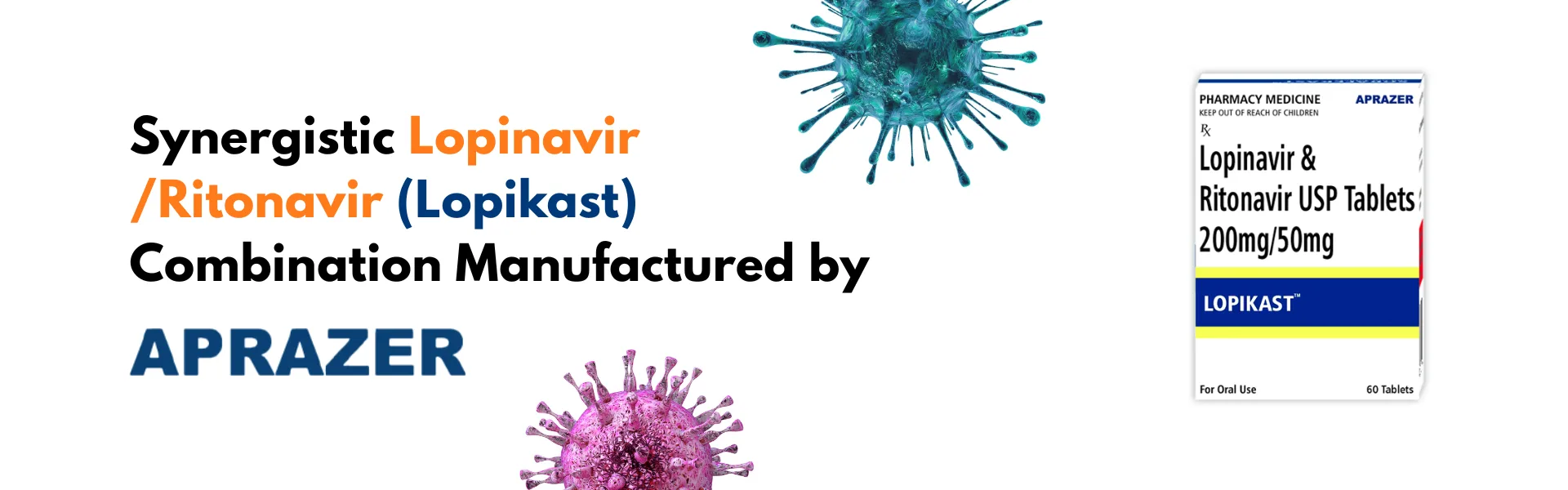
Synergistic Lopinavir/Ritonavir (Lopikast) Combination Manufactured by Aprazer Healthcare
The advanced Anti-retroviral drugs have dramatically led to the decline of HIV infection.
The mortality rate has fallen by about 70 percent.
The drugs reduce the viral count to undetectable levels, significantly reducing the risk of transmission.
The anti –retroviral drugs make the disease manageable and increase survival rates/years.
The commonly used Lopinavir /Ritonavir combination – Lopikast
Lopinavir /Ritonavir (Lopikast) is widely used for HIV treatment.
It is a globally available HIV medicine.
It is a combination of strong antivirals with a booster molecule.
Ritonavir increases the efficacy of Lopinavir many fold.
The key benefits include-
- It suppresses HIV virus to undetectable levels.
- It delays HIV progression to AIDs.
- It has a high barrier to resistance.
Aprazer Healthcare – Advancing HIV treatment
Aprazer Healthcare specializes in manufacturing HIV drugs.
Manufacturing a large range of antiretroviral combination drugs, we are a top tier generic HIV medicine manufacturer.
With an aim to eradicate HIV, we manufacture affordable HIV generic combinations.
Aprazer Healthcare is at the forefront in saving lives in HIV epidemic areas.
Aprazer Healthcare is a reliable drug exporter, supplying affordable HIV medicine to countries in Africa, Asia and America.
Why is Lopinavir combined with Ritonavir?
Lopinavir is a strong antiviral medicine.
Ritonavir is added to enhance the effect of Lopinavir.
Lopinavir breaks down at a faster rate in the body.
Ritonavir inhibits the breakdown.
It prolongs lopinavir activity.
Is it safe to be used in pediatric patients?
It is not recommended to be used in neonates before 14 days of age.
Children may require twice drug dosing than adults due to faster elimination of the drug.
Lopinavir /Ritonavir (Lopikast) is given in pregnancy. Is it safe?
It is commonly used to prevent HIV transmission from mother to the child.
It reduces the risk of preterm delivery.
It does not harm the fetus.
Can Lopikast stop viral transmission?
It drops the viral count to negligible.
It prevents transmission of virus from one person to another.
Lopinavir /Ritonavir (Lopikast) combination long-term side effects-
- Hyperlipidemia
- Insulin resistance
- Fat accumulation around abdomen
- Fat wasting around arms, legs
- Increased risk of kidney stones
- Bone loss
- Pancreatitis risk
Lopikast (Lopinavir/Ritonavir) combination – The two drugs engineered to form a single pill offers high resistance barrier and uncompromised suppression.
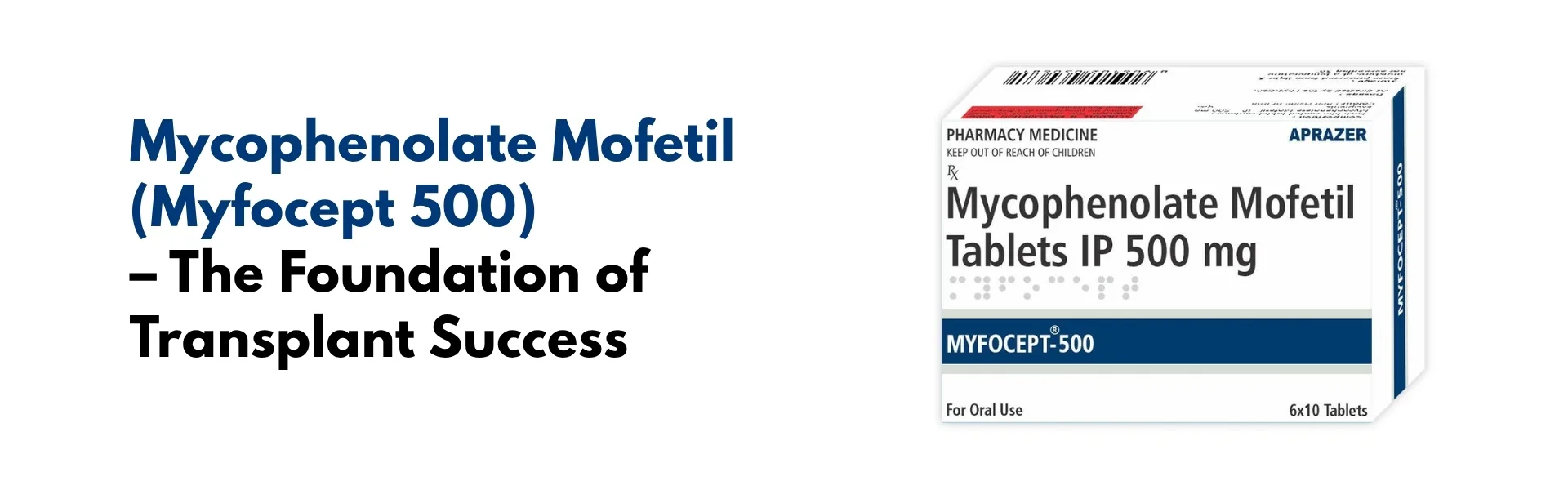
Mycophenolate Mofetil (Myfocept 500) – The Foundation of Transplant Success
Mycophenolate Mofetil is the core therapy drug to prevent acute organ rejection.
Mycophenolate Mofetil is available globally as Myfocept 500 and Myfocept 250.
It is a first-line drug in anti-rejection therapy.
What is Mycophenolate Mofetil (Myfocept 500)?
Mycophenolate Mofetil is an immunosuppressant drug.
It is widely used in organ transplant drug regimens.
It lowers immune activity and prevents the body’s rejection of the foreign organ.
Used in solid organ transplants –
- Liver transplant
- Kidney transplant
- Heart transplant
Aprazer Healthcare (pharmaceutical manufacturer) specializes in manufacturing specialty medicines.
We manufacture a global range of immunosuppressive agents and chronic disease medicines.
We are the leading specialty medicine exporter from India.
Manufacturing global standard drugs, Aprazer Healthcare’s products are accepted worldwide.
We supply immunosuppressive drugs to the leading hospitals and clinics.
How is Mycophenolate Mofetil (Myfocept 500) used in organ transplant therapy?
It forms an important part of the organ rejection drug regimen.
It is combined with other drugs, forming a triple–drug regimen.
- Mycophenolate Mofetil – It inhibits the formation of white blood cells.
These cells actively attack the new organ, causing immune rejection.
- Calcineurin inhibitor– It halts the activation of the T cells (white blood cell type).
It down regulates the immune action of the T-cells.
- Corticosteroid– It reduces the inflammation caused by transplant and suppresses immune flare.
Why is Mycophenolate Mofetil (Myfocept 500) combined with other drugs?
When combined with other drugs
- It offers better immune suppression
- It can be used in smaller doses
- It prevents acute rejections
- It offers lower side effects
- It offers longer graft and patient survival
The standard adult dose of Mycophenolate Mofetil (Myfocept 500)
Kidney transplant – For kidney transplant, the standard daily dose is 2g.
Liver /Heart transplant- For liver and heart transplant, the standard daily dose is 3g
Elderly patients – For elderly patients, the initial drug dose is low (500 mg).
Why is Mycophenolate Mofetil (Myfocept 500), the foundation for the anti-rejection regimen?
Targeted action – It specifically targets T and B lymphocytes.
It lowers harmful effects on other blood cells.
Lower steroid doses required- It is highly effective and requires low doses of corticosteroid, preventing steroid side effects.
Non-nephrotoxic – It does not harm the kidneys compared to other drugs.
It can be used long-term for organ preservation.
Standard First-Line Treatment for Hepatitis B – Entecavir (Entekor)
Hepatitis B is a global pandemic affecting 240 million people.
0.9 million new infection cases occur every year.
It is an infection (virus) directly affecting the liver.
Inconsistent treatment may lead to severe complications.
The virus damages the liver tissue.
The infection can lead to liver cirrhosis or liver failure.
It spreads easily through infected blood or body fluids.
Globally prescribed Hepatitis B medicine-
Entecavir (Entekor) is widely prescribed for Hepatitis B due to its safer profile.
Entekor and Entekast are popular brands of Entecavir tablets.
It is highly affordable and globally accessible.
These are safe to use in children above 2 years of age and elderly patients.
Aprazer Healthcare manufactures it in two different strengths.
- Entekast -0.5 (Entecavir 0.5 mg) tablets
- Entekast -1 (Entecavir 1 mg) tablets
Aprazer Healthcare is a hepatology medicine manufacturer and one of the top exporters of Entecavir (Entekor) tablets worldwide.
Manufacturing global-quality drugs, we export the largest range of Hepatitis B medicines.
Having an unparalleled distribution network and supply chain, Aprazer Healthcare is the global supplier of hepatitis medicines.
Our product portfolio comprises –
Hepatitis C and Hepatitis B medicines.
What is the working of Entecavir (Entekor)?
It does not eliminate Hepatitis B virus from the body.
It prevents the replication/multiplication of the virus.
It significantly lowers the viral load.
Why is Entecavir (Entekor) a preferred first-line treatment?
Doctors prefer Entecavir (Entekor) for treating Hepatitis B.
It has a safe profile.
- Highly potent
- Rapid action
- Lower risk of resistance
- It is safe to use in kidney impairment
- It is hepatoprotective
- It reverses liver damage
- Prevents disease progression
What is Entecavir (Entekor) dosage?
For untreated patients, it is used at 0.5 mg daily.
For patients who have developed resistance to lamivudine, the drug dose starts with 1 mg daily.
Children are given according to their body weight.
Does it prevent the spread?
Entecavir (Entekor) significantly reduces the viral count.
The virus levels fluctuate rapidly.
It does not prevent the spread.
Why is it important to get HIV tests before starting the treatment?
People co-infected with HIV must not use it alone.
It must be combined with other antiretroviral.
Its single use may lead to resistance against HIV.
You should not leave the medicine by yourself. Why?
Abrupt cessation of drug may lead to a hepatitis B flare-up.
It can rapidly lead to liver failure in conditions of liver scarring.
Why is Aprazer Healthcare a chosen brand for hepatology medicines?
Aprazer Healthcare specializes in manufacturing hepatology medicines.
We are a trusted brand for global hospital drug supplies.
Our strong attributes –
- WHO-GMP manufacturing facilities
- Quality assurance
- Global distribution
- Affordability
- Intact supply chain

Know Why Women Face a Higher Risk of Developing Arthritis?
Women account for 60 percent of osteoarthritis cases globally.
Postmenopausal women exhibit the highest disease burden.
Knee joints are affected first, followed by the hip joint and hands.
The earlier symptoms are mild and infrequent, so easily ignored.
Recognizing early signs and timely intervention prevents disease advancement.
Identifying the systemic or immune-based inflammation helps mitigate disease progression.
Irreversible damage can be prevented by early medications.
As the leading rheumatology drug manufacturer, Aprazer Healthcare manufactures a comprehensive range of rheumatology medicines.
We are the rheumatology drug exporters to international markets.
Following WHO standards and quality parameters, we manufacture drugs for global supplies.
Our flagship rheumatology medicines include-
What are the reasons for developing arthritis in women?
Hormonal factors –
Estrogen secretion stops after menopause.
Estrogen protects joints and controls inflammation.
A rapid fall in estrogen levels loosens the ligaments in the knee.
Physical structure-
Women have wider hips compared to men.
The unequal pressure on the hips and knees increases the risk of hip damage.
Immune system differences
Women are at risk of autoimmune diseases.
The immune system is more reactive compared to men.
Females are 2-3 times more affected by immune system attacks.
Obesity
The increased weight leads to intense physical pressure on the knees/hip.
It causes systemic inflammation.
It damages the cartilage.
It also erodes the bones.
Pregnancy/childbirth
Pregnancy causes changes in posture/ gait.
Childbirth causes a release of relaxin hormone.
It widens the pelvis.
It affects the cartilage and the joints.
It also causes metabolic changes, causing joint inflammation.
Emotional psychological factors
Chronic stress releases stress hormones.
These alter the immune response.
Sleep disturbances impair tissue repair.
Genetics – People with a family history of arthritis are prone to developing joint inflammation/arthritis.
The symptoms of arthritis-
- Joint pain
- Swelling and stiffness
- Fluid accumulation in the joints
- Reduced motility
The early arthritis signs to be watched –
- Stiffening of the joints while sitting /resting.
- Losing grip in the hands.
- Locking of the joints.
- Joints unable to bear full pressure
- Morning tenderness across the ankles and feet
- Persistent pain across the groin area
- Friction in moving joints
The arthritis treatment is focused on –
- Reducing joint pain
- Managing stiffness /swelling
- Preventing disease progression
The commonly used medicines include-
Pain killers/ anti-inflammatory drugs.
- Analgesics help relieve mild –moderate pain.
- NSAIDs reduce inflammation and pain.
Disease-modifying anti-rheumatic drugs
These are the drugs that prevent progressive damage of the joints.
These drugs target the immune pathways and inhibit the immune attack on the joints.
Corticosteroids
These are the anti-inflammatory drugs.
They prevent sudden immune flare-ups.
It suppresses severe inflammation.
Viscosupplementation-
The hyaluronic acid injections are given in the joints.
It mimics the joint fluid properties.
It prevents joint damage.
How to prevent arthritis progression?
- Active lifestyle
- Managing weight
- Proper diet.
- Quitting smoke
- Timely medication /treatment

To What Extent Does Diabetes Affect Your Kidneys?
Diabetes does not remain confined to increased blood sugar.
Over the years, diabetes damages your kidneys silently.
Diabetes continues to be a leading cause of kidney failure.
Controlled sugar levels reduce disease progression.
However, it does not eliminate the risk.
Let’s understand the link between diabetes and kidney damage.
Early identification can be a preventive approach.
It can stop the progression of the disease to an end-stage kidney disorder.
Focused on kidney disease treatments and prevention, Aprazer Healthcare manufactures a range of affordable nephrology medicines.
We are the leading nephrology drug manufacturer, exporting kidney medicines worldwide.
Our product portfolio consists of –
- Anti- diabetic combinations
- Kidney transplant medicines
- Nephrology and diuretics
How does diabetes damage kidneys?
High blood sugar is often accompanied by high blood pressure.
The kidney damage occurs through several mechanisms –
Hyperfiltration and mechanical stress-
Chronic high sugars strain the tiny blood vessels.
It increases kidneys to work harder.
The kidneys stop filtering proteins.
The proteins leak into the urine.
Damaged blood vessels-
The increased glucose stiffens the blood vessels.
It thickens the blood and induces clogging.
Nerve damage-
It damages the nerves of the bladder.
It leads to buildup of back pressure on the kidneys.
It also increases the risk of UTI.
Scarring – The injury to the nephrons slowly leads to scarring.
It destroys the ability to filter blood.
What are early signs of kidney damage, a diabetic must never ignore?
- Foamy urine –
It indicates that the filtering capacity of the kidneys is damaged.
The kidney is not able to retain proteins.
The proteins are directly excreted into the urine.
- Edema –
It is the swelling in the feet, hands, and ankles. Puffy eyes.
It is caused when the kidney is not able to excrete the excess fluid or sodium.
It leads to water retention.
The excess fluid leaks from the blood capillaries.
- Increased urination at night
In conditions of high sugar, the body excretes excess sugar through the urine.
It increases urination. It leads to water depletion.
It increases strain on the kidney cells.
It can damage nephrons.
- Persistent high blood pressure-
Kidneys regulate blood pressure.
It filters out excess salts and water.
Any damage to the kidneys decreases their capacity to filter.
It increases blood pressure.
- Unusual weight gain
A person gains excess weight due to fluid retention.
It is not the muscle weight; it’s the weight of the water retained in the body.
Long-term warning signs –
- Weakness /fatigue –
Kidneys produce a hormone that forms blood.
The damage to the kidney leads to reduced formation of blood.
It leads to –
- Anemia
- Chronic weakness
- Changes in taste, nausea –
The unfiltered blood leads to toxin buildup in the blood.
It causes metallic taste or vomiting.
- Edema in the lungs
Fluid builds up in the lungs.
It causes difficulty in breathing.
It leads to shortness of breath.
- Muscle cramps /pain-
Altered kidney filtration leads to electrolyte imbalance.
It leads to increased potassium and magnesium, and low calcium.
Acid- base imbalance.
- Increased Insulin Levels-
Kidneys break down insulin.
The damaged kidneys are not able to metabolize insulin.
It causes an increased level of insulin.
Conclusion –
Know your kidneys; kidney disease is silent.
The damage reaches the advanced stages before the usual symptoms appear.
The early sign is often albuminuria, which starts many years before symptoms.
For a diabetic, it becomes more important to have regular monitoring of the kidneys.
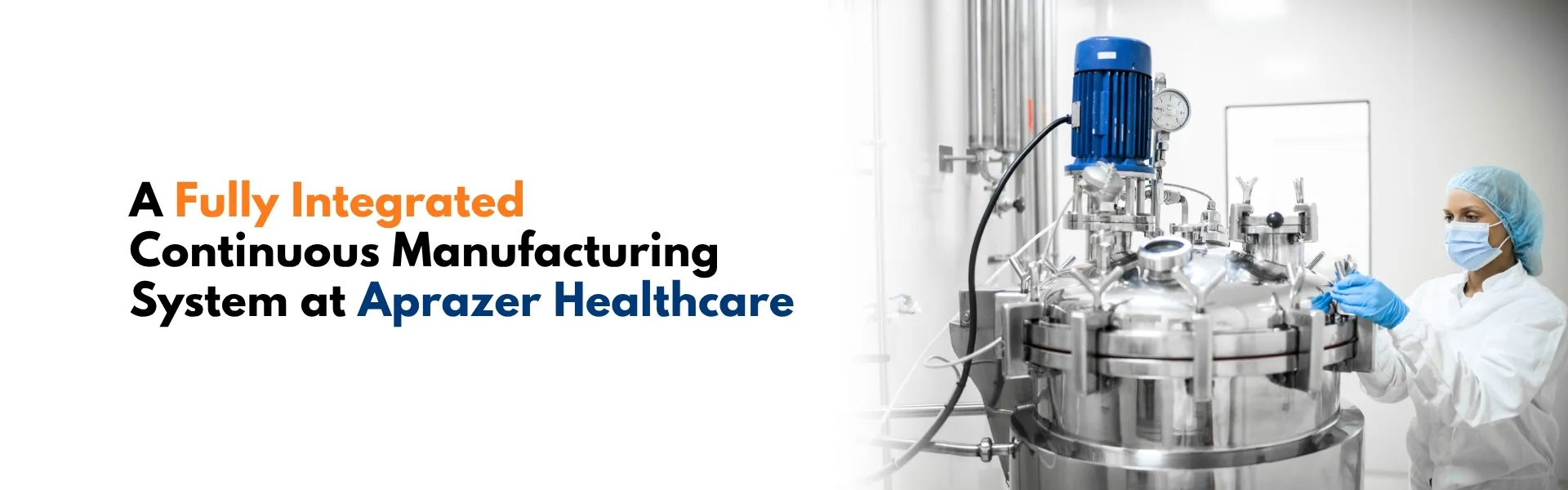
A Fully Integrated Continuous Manufacturing System at Aprazer Healthcare
Aprazer Healthcare is a pharmaceutical manufacturer.
With the largest oral solid plant at Haridwar, we are capable of manufacturing different solid dosage forms.
We are equipped with end-to-end continuous manufacturing systems, processing the powdered forms to final coated tablets.
The Triad of Dosage formulation
A dosage form is as important as the drug itself.
A successful formulation delivers the drug safely and effectively to the site.
It includes an intricate process of-
- Consistent release
- Enhanced absorption
- Drug stability
Different types of Oral dosage forms-
- Tablets
- Capsules
- Powders and granules
The components of solid dosage formulations-
API – The active pharmaceutical ingredients.
It gives the therapeutic effect.
Excipients – These are the components used to blend with API.
It enhances its –
- Solubility
- taste
- stability
- shelf life
- compressibility
Finished product – the capsule or tablets that are consumable
Packaging – The tablets or the capsules are dispensed into sealable outer coverings to prevent degradation.
The critical steps involved in manufacturing solid oral dosage forms
Preformulation studies –
It is the investigational phase.
The physical, chemical, and biochemical properties of the API are studied.
It provides necessary data that helps excipient selection.
Compatibility testing –
It is the analysis of the interactions between the drug and the excipient.
The API mixture and the selected excipient are subjected to stress testing.
It is passed through analytical testing.
- HPLC
- Differential Scanning Calorimetry (DSC)
Prototype creation-
A small batch is prepared at laboratory scales.
It is tested for physical prototypes.
- Hardness
- Friability
- Dissolution
Stability and shelf life testing
It includes accelerated testing.
It is done to predict-
- Shelf life
- Long-term degradation
- Expiry date
Scaling up production
In this the operational parameters are adjusted.
- Compression force
- Mixing speed
- Drying times
It ensures batch-to –batch consistency and uniform API distribution.
Regulatory dossier preparation
It is the compilation of all the documents for regulatory approvals.
The operational stages include –
- Weighing /dispensing
- Milling/blending
- Granulation
- Drying /screening
- Compression/encapsulation
- Coating
Aprazer’s expertise in manufacturing oral dosage forms
Meeting the diverse needs of customers, we manufacture small batches to large volume productions.
Equipped with extensive granulation techniques, we are capable of manufacturing compressed tablets to complex dosage forms.
The types of oral dosage forms manufactured at Aprazer Healthcare includes-
- Uncoated tablets
- Film-coated tablets
- Modified release tablets
- Oral dissolving tablets
- Capsules

Understanding Your Pregnancy High Blood Pressure and the Common Medicine
High blood pressure often remains silent and unnoticed.
However, the rise during pregnancy can severely affect both the child and the mother.
Quick facts –
- Preeclampsia affects 3 to 8 % of pregnancies across the world.
- It accounts for 16% of global maternity deaths.
- It contributes to preterm deliveries in 45% of pregnancy cases.
As the drug manufacturer, Aprazer Healthcare manufactures a range of antihypertensive combinations offering effective, safe BP control.
We are the leading antihypertensive drug exporters from India.
Labetalol (labzer) manufactured by Aprazer Healthcare is globally prescribed for hypertensive control in pregnancy.
Why does blood pressure rise in pregnancy?
Blood pressure rises during pregnancy due to underlying health conditions –
- Obesity
- Smoking
- Having a first pregnancy
- Pregnancy after 40 years of age or before 18 years of age.
- Diabetes
- Chronic diseases
- Pregnancy with twins and triplets
Know the types of hypertension in pregnancy-
The blood pressure rises after the 20th week of pregnancy.
The high BP ranges above 140mmg hg/90mm hg.
- Gestational hypertension –
It is the rise in blood pressure without severe complications.
It does not show any symptoms.
It resolves within 12 weeks after childbirth.
- Preeclampsia
It is a severe rise in blood pressure during pregnancy.
The high BP directly damages the internal organs – Liver /kidney
It can occur before or after childbirth.
- Chronic hypertension
It is a condition in which the mother already suffers from high BP.
It is caused by underlying diseases.
What are the risks posed by high BP during pregnancy?
- Reduced blood flow to the placenta –
The high BP reduces the flow of blood to the placenta.
It reduces the flow of oxygen and nutrients to the fetus.
- Placental abruption
The high BP can detach the placenta from the inner wall of the uterus.
It can lead to severe bleeding.
It can be fatal to both the baby and the mother.
- Decreases fetal growth
Improper supply of nutrients restricts the weight and the development of the fetus.
- Injury to internal organs
High BP may injure the internal organs.
- Premature delivery
It increases the chances of undeveloped organs in the fetus and before time delivery.
- Risk of cardiovascular diseases
High BP can increase the risk of getting cardiac complications in the future.
What are the symptoms of high BP while pregnant?
Hypertension is followed by symptoms –
- Persistent high BP
- Severe headache
- Protein in urine
- Vision changes
- Pain in upper abdomen
- Nausea /vomiting
- Fluid retention
Which is the commonly used medicine to control high BP in pregnancy?
Oral Labetalol (Labzer) therapy is used to maintain a steady level.
Labetalol is chosen because –
- Safer profile for both the mother and the child.
- Faster onset of action.
- Fewer side effects
- Dual mechanism of action
It is widely used in blood pressure hovering over a range of –
140/90mm hg and 159/109 mm Hg
It is used as first-line treatment to manage gestational hypertension.
Aprazer Healthcare – The Top Pharmaceutical Drug Manufacturer
Manufacturing over 200 + generic drugs, we are the leading drug exporters and suppliers from India.
We specialize in manufacturing cardiovascular medicines.
Our product portfolio consists of global standard medicines.
- Anti-hypertensive combination
- Lipid–lowering agents
- Anti-lipemic agents

How to Choose Between Tadalafil (Tadabest) /Sildenafil (Viabest)?
Know the difference-
They are both erectile dysfunction medicines, often used interchangeably.
Both of them have similar functions and a similar mode of action.
The difference lies in the duration of action.
Tadalafil is widely used for spontaneous sexual activity for a longer time.
Its effect lasts for more than one and a half days.
Sildenafil is used for sexual activity for a short duration.
Its effects last for 4 hours.
When does the doctor prescribe tadalafil /sildenafil?
It is prescribed based on patient history and lifestyle choices.
It depends on the sex frequency.
Those requiring regular sexual activity prefer tadalafil.
On a daily dose basis, doctors prescribe a low dose of tadalafil.
It builds up in the penile tissue and causes spontaneous erections upon arousal.
It is used to maintain constant levels in the body, rather than taking a tablet every day before sex.
Tadalafil can be used to treat BPH along with erection.
Sildenafil is used for a shorter-duration effect.
It has a shorter half-life.
It is eliminated faster from the body.
Those with infrequent sex use sildenafil.
Can I take both together for a stronger erection?
One should not use the 2 tablets together or even take double doses.
It can lead to prolonged painful erections.
An overdose can damage the penile tissue.
It can cause a severe drop in blood pressure.
It can lead to hypotension.
Other side effects include –
Lightheadedness, dizziness, fainting
Tadalafil /sildenafil are available in different strengths –
Tadalafil is available as –
2.5/5/10/ 20mg.
Sildenafil is available as –
25/50/ 100 mg.
The perfect time to take tadalafil /sildenafil tablet-
A single tablet is taken 30-60 minutes before performing sex.
For continuous effect, tadalafil is given in short doses of 2.5 or 5 mg daily.
Sildenafil must not be used after a heavy meal.
Tadalafil can be used with/without food.
Aprazer Healthcare- The leading erectile dysfunction medicine manufacturer
As the ED drug manufacturer, we are focused on developing effective medicines to improve men’s sexual health.
We manufacture the widest range of global quality ED medicines.
Recognized as the top drug exporters, we export world-class erectile dysfunction combinations globally.
The widely used ED medicines-
- Viabest-100, Tadabest – Erectile dysfunction medicine
- Super-viabest – Premature ejaculation medicine